
Resolving family legal issues can be stressful and complicated. Emotions run high, and it can be difficult to see the matter clearly. You need objective legal counsel from an experienced family attorney. Call the Law Office of John Williams in Charlotte, NC. John Williams can assist you if you're filing for divorce. He also handles child custody and guardianship cases.
Arrange for a consultation with a divorce attorney in Charlotte, NC today.
State Issues
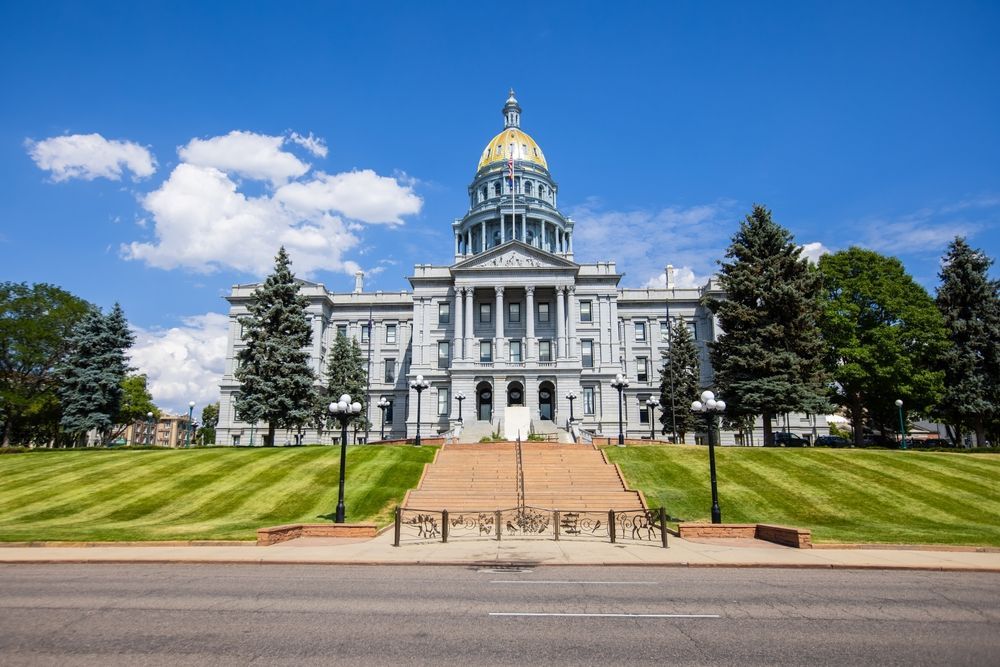
Colorado Wasteful Spending (FY 2024-25)
Department of Corrections: $ 7,995,411 Increase 28.3 FTE
● Transgender Unit and Healthcare
- $2,677,911 to create two transgender living units totaling 148 beds.
- $5,317,500 for “gender-confirming surgical care.
●Clinical Staff Incentives
- $6,312,464 General Fund to provide incentive payments for certain DOC clinical staff up to $25,000.
- The bill includes an increase of $6,312,464 General Fund to provide incentive payments for certain DOC clinical staff up to $25,000.
●HB 24-1389 School Funding 2023-24 for New Arrival Students (immigrants): $24,000,000
- The bill provides $24,000,000 to be distributed to school districts and charter schools for new arrival students. It increases state expenditures and school district funding in the current FY 2023-24 only.
● Office of New Americans Expansion (immigrants): $119,029 General Fund and 1.5 FTE
- $119,029 General Fund and 1.5 FTE for an administrator to manage ONA grants, coordinate with other entities, and identify opportunities for new migrant career pathway enhancement and a full-time program assistant to support the ONA Director.
-This office has had difficulty expending grants.
●SB 24-182 Immigrant Identification Document Issuance: $ 122,855
- The bill changes certain requirements for the issuance of driver licenses or state identification cards to individuals who are not lawfully present in the United States. The bill increases state expenditures for FY 2024-25 and FY 2025-26 only.
●HB 24-1280 Welcome, Reception, Integration, Grant Program:
$ 2,436,862
- The bill creates the Statewide Welcome, Reception, and Integration Grant Program to provide assistance to migrants. It transfers funds in FY 2024-25 only.
●Immigrant Legal Defense Fund: $ 350,000
- Long Bill budget amendment
- A doubling of the fund for FY 2024-25 making a total budget of $700,000. This funding is used for public defense for people facing immigration legal issues. Sponsored by Rep. Mabrey and Sen. Gonzalez.
●Office of Health Equity and Environmental Justice: $ 2,840,715
- Funding for the Office
- Mission: Build partnerships to mobilize community power and transform systems to advance health equity and environmental justice.
- What this office does to advance their mission:
1. Build relationships with communities and across sectors to address root causes of health disparities.
2. Use equity in decision-making and partner with all sectors of government to embed health and equity considerations into their decision-making process.
3. Use data to support the narrative of the social determinants of health and tell the story of what creates health.
4. De-center communications from the English language or any one dominant language, and prioritize language justice when engaging with communities.
5. Develop, implement, and provide guidance on health equity training, practice, and policies within CDPHE and across the state of Colorado.
6. Focus on upstream determinants of health, guided by the Bay Area Regional Health Inequities Initiative.
●HB 24-1197 Department of Public Safety Supplemental: $ 9,800,000
- Funding for Community-based organizations providing service for migrants.
- Funds to provide grants to community-based organizations providing services to people migrating to Colorado.
●Department of Education: $ 56,100,000
- Expanding Healthy Meals for All Program.
- Adds $56.1 million total funds for the Healthy School Meals for All Program, including $40.6 million from the Healthy School Meals for All Program General Fund Exempt Account and $15.5 million from the General Fund. This includes an increase of $56.0 million for meal reimbursements and $100,000 for consulting resources.
●HB 21-1318 Department of Public Health & Environment: $ 198,192
- Outdoor Equity Program
- This bill injected identity politics into access to the outdoors.
●Department of Public Health & Environment: $2,840,715 total funds and 8.3 FTE
- Creating the Office of Health Equity and Environmental Justice by combining two offices.
- The bill includes an increase of $2,840,715 total funds and 8.3 FTE, including a reduction of $11,349 General Fund, to join the Environmental Justice Program with the Office of Health Equity to form the Office of Health Equity and Environmental Justice (OHEEJ) for the purpose of centralizing environmental justice staff. OHEEJ is responsible for ongoing environmental justice work, including administration of environmental health mitigation grants through the Community Impact Cash Fund.
●Department of Revenue: $714,515 total funds and 8.3 FTE
- GENTAX & DRIVES SUPPORT FUNDING: The bill includes an increase of $714,515 total funds and 8.3 FTE, comprised of $442,906 General Fund and $271,609 cash funds from the Colorado DRIVES Vehicle Services. Account, in FY 2024-25. Funds will address the backlog of upgrades and system enhancements to the DRIVES and GenTax systems stemming from legislative, user experience, and system operational demands.
Defending Party Autonomy in Colorado Elections
Rachel Suh's lawsuit in Denver District Court, scheduled to begin February 5th, 2026, seeks to block Colorado's political parties from certifying caucus results for primary ballot access, requesting a preliminary injunction to force candidates to rely solely on petitions. This would neuter the caucus process just weeks before it starts on March 3. Suh argues this avoids the Purcell Principle by not altering state-administered elections, claiming parties act as delegated third parties. However, her stance overlooks parties' role as private organizations with the right to select their representatives.
The Role of Political Parties
The party system enables like-minded individuals to unite, establish principles, and choose candidates who embody those values. Parties should select nominees through caucuses, conventions, or other internal methods as they see fit. Non-members should not influence the party selection process in any manner; their input belongs in the general election. Suh's effort to open or invalidate caucus certifications disregards this structure, which safeguards party integrity and prevents external meddling.
Opposition to Proposition 108
I personally opposed Proposition 108, which let unaffiliated voters vote in partisan primaries. Why? Because it dilutes party control by allowing outsiders influence without commitment. Unaffiliated voters wanting input should affiliate. Affiliation is a choice in our multi-party system. Suh highlights that unaffiliated voters, now 49.7% of Colorado's electorate, are excluded from caucuses. But this is reversed logic: unaffiliated status is voluntary. And in a rare moment of concurrence, I agree with Colorado Attorney General Phil Weiser's motion to dismiss, which states; "they can join a party to participate".
Legal Precedents Supporting Party Autonomy
Supreme Court cases affirm parties' First Amendment rights to control nominations. In California Democratic Party v. Jones (2000), the Court invalidated a blanket primary for violating associational freedoms by including non-members. Tashjian v. Republican Party of Connecticut (1986) ruled states cannot prevent parties from inviting independents if they choose, stressing party discretion. Democratic Party of the United States v. Wisconsin ex rel. La Follette (1981) held states cannot force parties to seat delegates against rules. Clingman v. Beaver (2005) upheld semi-closed primaries, allowing exclusion of other parties' members. These precedents back Colorado's caucus system, excluding unaffiliated voters from party processes.
Addressing Suh's Constitutional Claims
Conditioning participation on affiliation is a system feature, not harm. Suh deems it a constitutional violation, but parties are private entities under state oversight, not delegating government power. Her claim that parties breach Colorado's separation of powers by certifying results is misguided. Parties exercise autonomy; the state recognizes their choices for ballot access, balancing private activities with orderly elections. There is nothing stopping Suh, or anyone else for that matter, from forming their own 3rd Party that conveys their values.
The True Nature of Unaffiliated Voters
Unaffiliated voters are not truly neutral; they often aim to disrupt parties rather than build their own. This mirrors Maoist tactics to undermine systems from within. Lacking cohesion to form a competing group, they use the "unaffiliated" label to erode established parties with core beliefs. In a multi-party system, failure to affiliate suggests disingenuity or laziness.
Hypocrisy and Systemic Issues
Data shows 48% of unaffiliated voters lean Democrat, 47% Republican, and 5% minor parties—meaning only 2.5% of the electorate truly diverges. Yet they criticize two-party dominance loudly. It's hypocritical to claim independence while voting major-party lines, revealing core values without honest affiliation. This often stems from virtue signaling, which is most prominent coming from the left leaning unaffiliated, or fear of social fallout, as politics is taboo for many and intolerance tends to strains relationships.
The 49.7% unaffiliated rate stems from DMV auto-registration, defaulting to unaffiliated when obtaining a driver's license. Many wouldn't register otherwise. Anecdotes, including my own upon returning to Colorado, show errors favoring unaffiliated for Republicans but not Democrats in red counties, suggesting bias in blue areas that inflates numbers artificially.
Suh's lawsuit, if successful, would disrupt caucus candidates by forcing last-minute signatures. Parties are private, entitled to closed processes. The court should deny the injunction and dismiss, preserving Colorado's system. Unaffiliated voters have options; Suh's challenge, if successful, would undermine our ability to freely associate with like-minded individuals and select the candidates that we agree upon best represent our values. Let’s hope that does not happen. Because, if it does, it just may destroy our Republic and the very foundation it was built upon.
Just one man’s humble opinion.
Michael J Badagliacco, “MJB”
Michael is a father of 5, grandfather of 3, USAF Veteran, recording artist, entrepreneur, Editor of USA Liberty Report, passionate about Freedom, Liberty, the founders’ genius of the Constitution and current Candidate for Montrose City Council.