
Resolving family legal issues can be stressful and complicated. Emotions run high, and it can be difficult to see the matter clearly. You need objective legal counsel from an experienced family attorney. Call the Law Office of John Williams in Charlotte, NC. John Williams can assist you if you're filing for divorce. He also handles child custody and guardianship cases.
Arrange for a consultation with a divorce attorney in Charlotte, NC today.
State Issues
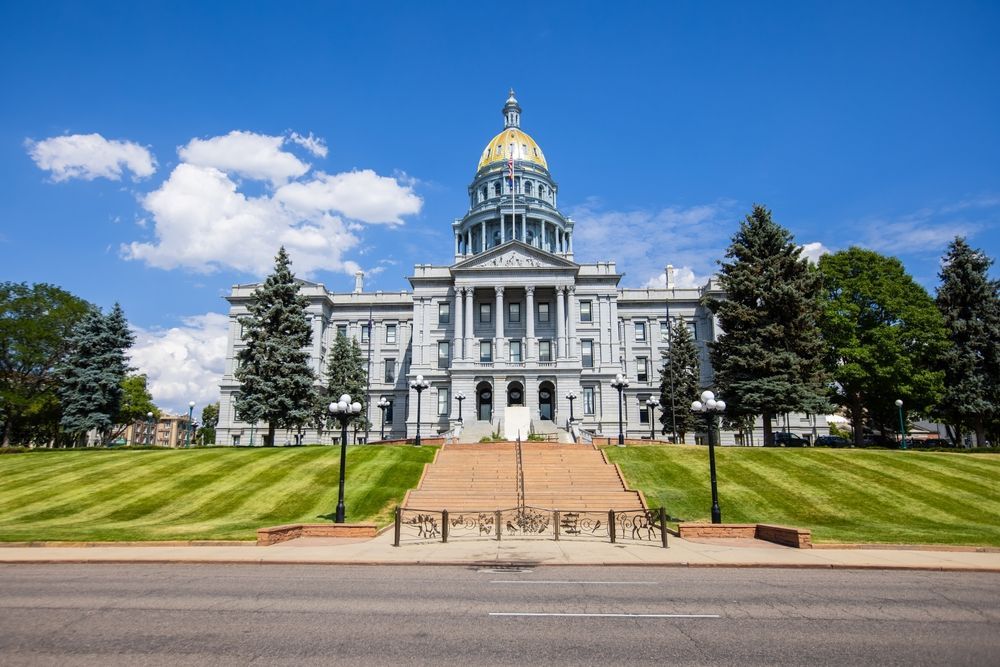
Colorado Wasteful Spending (FY 2024-25)
Department of Corrections: $ 7,995,411 Increase 28.3 FTE
● Transgender Unit and Healthcare
- $2,677,911 to create two transgender living units totaling 148 beds.
- $5,317,500 for “gender-confirming surgical care.
●Clinical Staff Incentives
- $6,312,464 General Fund to provide incentive payments for certain DOC clinical staff up to $25,000.
- The bill includes an increase of $6,312,464 General Fund to provide incentive payments for certain DOC clinical staff up to $25,000.
●HB 24-1389 School Funding 2023-24 for New Arrival Students (immigrants): $24,000,000
- The bill provides $24,000,000 to be distributed to school districts and charter schools for new arrival students. It increases state expenditures and school district funding in the current FY 2023-24 only.
● Office of New Americans Expansion (immigrants): $119,029 General Fund and 1.5 FTE
- $119,029 General Fund and 1.5 FTE for an administrator to manage ONA grants, coordinate with other entities, and identify opportunities for new migrant career pathway enhancement and a full-time program assistant to support the ONA Director.
-This office has had difficulty expending grants.
●SB 24-182 Immigrant Identification Document Issuance: $ 122,855
- The bill changes certain requirements for the issuance of driver licenses or state identification cards to individuals who are not lawfully present in the United States. The bill increases state expenditures for FY 2024-25 and FY 2025-26 only.
●HB 24-1280 Welcome, Reception, Integration, Grant Program:
$ 2,436,862
- The bill creates the Statewide Welcome, Reception, and Integration Grant Program to provide assistance to migrants. It transfers funds in FY 2024-25 only.
●Immigrant Legal Defense Fund: $ 350,000
- Long Bill budget amendment
- A doubling of the fund for FY 2024-25 making a total budget of $700,000. This funding is used for public defense for people facing immigration legal issues. Sponsored by Rep. Mabrey and Sen. Gonzalez.
●Office of Health Equity and Environmental Justice: $ 2,840,715
- Funding for the Office
- Mission: Build partnerships to mobilize community power and transform systems to advance health equity and environmental justice.
- What this office does to advance their mission:
1. Build relationships with communities and across sectors to address root causes of health disparities.
2. Use equity in decision-making and partner with all sectors of government to embed health and equity considerations into their decision-making process.
3. Use data to support the narrative of the social determinants of health and tell the story of what creates health.
4. De-center communications from the English language or any one dominant language, and prioritize language justice when engaging with communities.
5. Develop, implement, and provide guidance on health equity training, practice, and policies within CDPHE and across the state of Colorado.
6. Focus on upstream determinants of health, guided by the Bay Area Regional Health Inequities Initiative.
●HB 24-1197 Department of Public Safety Supplemental: $ 9,800,000
- Funding for Community-based organizations providing service for migrants.
- Funds to provide grants to community-based organizations providing services to people migrating to Colorado.
●Department of Education: $ 56,100,000
- Expanding Healthy Meals for All Program.
- Adds $56.1 million total funds for the Healthy School Meals for All Program, including $40.6 million from the Healthy School Meals for All Program General Fund Exempt Account and $15.5 million from the General Fund. This includes an increase of $56.0 million for meal reimbursements and $100,000 for consulting resources.
●HB 21-1318 Department of Public Health & Environment: $ 198,192
- Outdoor Equity Program
- This bill injected identity politics into access to the outdoors.
●Department of Public Health & Environment: $2,840,715 total funds and 8.3 FTE
- Creating the Office of Health Equity and Environmental Justice by combining two offices.
- The bill includes an increase of $2,840,715 total funds and 8.3 FTE, including a reduction of $11,349 General Fund, to join the Environmental Justice Program with the Office of Health Equity to form the Office of Health Equity and Environmental Justice (OHEEJ) for the purpose of centralizing environmental justice staff. OHEEJ is responsible for ongoing environmental justice work, including administration of environmental health mitigation grants through the Community Impact Cash Fund.
●Department of Revenue: $714,515 total funds and 8.3 FTE
- GENTAX & DRIVES SUPPORT FUNDING: The bill includes an increase of $714,515 total funds and 8.3 FTE, comprised of $442,906 General Fund and $271,609 cash funds from the Colorado DRIVES Vehicle Services. Account, in FY 2024-25. Funds will address the backlog of upgrades and system enhancements to the DRIVES and GenTax systems stemming from legislative, user experience, and system operational demands.
Accountability Gaps in Colorado's State Government:
Audit Failures and Budget Concerns
In recent discussions within the Colorado House of Representatives, significant concerns have emerged regarding the lack of accountability in state audits and budget allocations. Information from the State Auditor's office highlights persistent issues with unresolved audits and the absence of consequences for non-compliance across various sectors.
The State Auditor has pointed out audits that remain unfixed for extended periods, with 70 outstanding Audits. Despite this, there are no repercussions for failing to address the findings. This lack of enforcement raises questions about the effectiveness of the auditing process in ensuring government efficiency and transparency.
Higher education funding stands out as a major area of scrutiny. The state allocates $6.5 billion to this sector, yet questions arise about the justification for such substantial investment. Out of 41 recommendations made in audits, only six have been implemented. This low compliance rate underscores a broader issue: zero accountability for how these funds are managed and utilized.
Similar concerns extend to K-12 education, which receives $5.6 billion in state funding. The Colorado Department of Transportation (CDOT) also faces criticism for having no accountability mechanisms in place for its budget. These examples illustrate a pattern where large sums of public money are disbursed without sufficient oversight or follow-through on audit recommendations.
A deeper examination reveals why imposing fines on executive branch departments for audit non-compliance is not feasible. Allowing the Office of the State Auditor, which operates under the legislative branch, to levy fines would likely violate the Separation of Powers clause in Article III of the state constitution.
This setup would grant legislative personnel direct enforcement over executive operations, circumventing the intended checks and balances.
Additionally, such fines would infringe on the appropriations clause, as they could interfere with the General Assembly's exclusive authority to allocate state funds. Notably, no other state in the U.S. employs this approach, further highlighting its potential constitutional and practical challenges.
While fines are off the table, alternative strategies have been proposed to address these accountability gaps. One option is to strengthen existing tools by expanding C.R.S. §2-3-103(9.5). This would mandate quarterly public compliance reporting, along with fixed executive response timelines, replacing the current event-triggered system set by the State Auditor.
Another path involves enhancing integration with the Joint Budget Committee (JBC). This could include formal policies where patterns of non-compliance trigger special budget hearings, potentially leading to reductions in appropriations for offending agencies.
Linking audit compliance to performance evaluations is also suggested. Collaborating with the Governor's office could incorporate these metrics into executive reviews, incentivizing better adherence.
For cases of repeated and severe non-compliance, piloting cost-recovery audits is an idea worth exploring. Agencies would bear the cost of follow-up audits, directly impacting their budgets and encouraging prompt resolution.
Finally, a three-year evaluation period could be established to assess the effectiveness of these enhanced transparency and legislative integration measures. This step would provide data-driven insights before reconsidering more punitive options like fines.
These proposals aim to foster greater accountability without overstepping constitutional boundaries. As Colorado lawmakers continue to grapple with these issues, the focus remains on ensuring that taxpayer dollars are used effectively and that government operations meet the highest standards of efficiency and transparency.
Michael J Badagliacco, “MJB”
Michael is a father of five, grandfather of three, U.S. Air Force Veteran, international recording artist, Editor-in-Chief of the Colorado DOGE Report and USA Liberty Report, a Citizen of Montrose, CO, passionate about Montrose, Colorado, the United States of America, Freedom, Liberty and the founders’ genius in crafting the Constitution.