Resolving family legal issues can be stressful and complicated. Emotions run high, and it can be difficult to see the matter clearly. You need objective legal counsel from an experienced family attorney. Call the Law Office of John Williams in Charlotte, NC. John Williams can assist you if you're filing for divorce. He also handles child custody and guardianship cases.
Arrange for a consultation with a divorce attorney in Charlotte, NC today.
State Issues
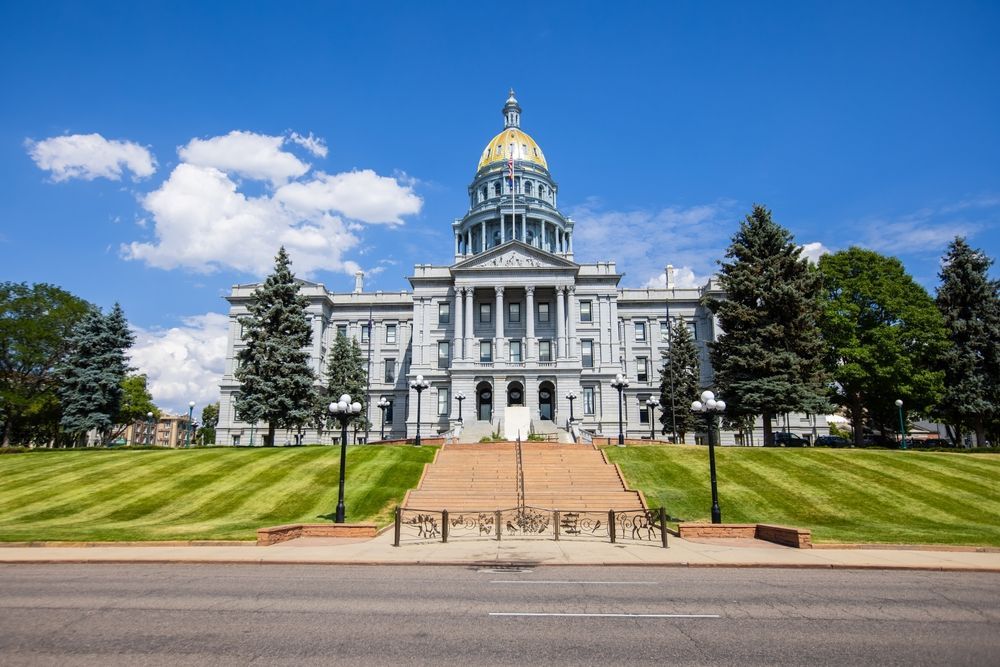
Colorado Wasteful Spending (FY 2024-25)
Department of Corrections: $ 7,995,411 Increase 28.3 FTE
● Transgender Unit and Healthcare
- $2,677,911 to create two transgender living units totaling 148 beds.
- $5,317,500 for “gender-confirming surgical care.
●Clinical Staff Incentives
- $6,312,464 General Fund to provide incentive payments for certain DOC clinical staff up to $25,000.
- The bill includes an increase of $6,312,464 General Fund to provide incentive payments for certain DOC clinical staff up to $25,000.
●HB 24-1389 School Funding 2023-24 for New Arrival Students (immigrants): $24,000,000
- The bill provides $24,000,000 to be distributed to school districts and charter schools for new arrival students. It increases state expenditures and school district funding in the current FY 2023-24 only.
● Office of New Americans Expansion (immigrants): $119,029 General Fund and 1.5 FTE
- $119,029 General Fund and 1.5 FTE for an administrator to manage ONA grants, coordinate with other entities, and identify opportunities for new migrant career pathway enhancement and a full-time program assistant to support the ONA Director.
-This office has had difficulty expending grants.
●SB 24-182 Immigrant Identification Document Issuance: $ 122,855
- The bill changes certain requirements for the issuance of driver licenses or state identification cards to individuals who are not lawfully present in the United States. The bill increases state expenditures for FY 2024-25 and FY 2025-26 only.
●HB 24-1280 Welcome, Reception, Integration, Grant Program:
$ 2,436,862
- The bill creates the Statewide Welcome, Reception, and Integration Grant Program to provide assistance to migrants. It transfers funds in FY 2024-25 only.
●Immigrant Legal Defense Fund: $ 350,000
- Long Bill budget amendment
- A doubling of the fund for FY 2024-25 making a total budget of $700,000. This funding is used for public defense for people facing immigration legal issues. Sponsored by Rep. Mabrey and Sen. Gonzalez.
●Office of Health Equity and Environmental Justice: $ 2,840,715
- Funding for the Office
- Mission: Build partnerships to mobilize community power and transform systems to advance health equity and environmental justice.
- What this office does to advance their mission:
1. Build relationships with communities and across sectors to address root causes of health disparities.
2. Use equity in decision-making and partner with all sectors of government to embed health and equity considerations into their decision-making process.
3. Use data to support the narrative of the social determinants of health and tell the story of what creates health.
4. De-center communications from the English language or any one dominant language, and prioritize language justice when engaging with communities.
5. Develop, implement, and provide guidance on health equity training, practice, and policies within CDPHE and across the state of Colorado.
6. Focus on upstream determinants of health, guided by the Bay Area Regional Health Inequities Initiative.
●HB 24-1197 Department of Public Safety Supplemental: $ 9,800,000
- Funding for Community-based organizations providing service for migrants.
- Funds to provide grants to community-based organizations providing services to people migrating to Colorado.
●Department of Education: $ 56,100,000
- Expanding Healthy Meals for All Program.
- Adds $56.1 million total funds for the Healthy School Meals for All Program, including $40.6 million from the Healthy School Meals for All Program General Fund Exempt Account and $15.5 million from the General Fund. This includes an increase of $56.0 million for meal reimbursements and $100,000 for consulting resources.
●HB 21-1318 Department of Public Health & Environment: $ 198,192
- Outdoor Equity Program
- This bill injected identity politics into access to the outdoors.
●Department of Public Health & Environment: $2,840,715 total funds and 8.3 FTE
- Creating the Office of Health Equity and Environmental Justice by combining two offices.
- The bill includes an increase of $2,840,715 total funds and 8.3 FTE, including a reduction of $11,349 General Fund, to join the Environmental Justice Program with the Office of Health Equity to form the Office of Health Equity and Environmental Justice (OHEEJ) for the purpose of centralizing environmental justice staff. OHEEJ is responsible for ongoing environmental justice work, including administration of environmental health mitigation grants through the Community Impact Cash Fund.
●Department of Revenue: $714,515 total funds and 8.3 FTE
- GENTAX & DRIVES SUPPORT FUNDING: The bill includes an increase of $714,515 total funds and 8.3 FTE, comprised of $442,906 General Fund and $271,609 cash funds from the Colorado DRIVES Vehicle Services. Account, in FY 2024-25. Funds will address the backlog of upgrades and system enhancements to the DRIVES and GenTax systems stemming from legislative, user experience, and system operational demands.
Privacy Concerns:
Flock Cameras and Colorado's Surveillance Dilemma
In Colorado, the rapid deployment of Flock Safety cameras by law enforcement agencies has sparked intense debate over privacy and constitutional rights. These automated license plate recognition (ALPR) systems, installed in communities like Denver, Montrose, and Grand Junction, capture vehicle details including plates, make, model, and color. Proponents argue they aid in solving crimes such as auto theft. However, critics, including the ACLU of Colorado, contend that the network enables mass surveillance without citizen consent, potentially violating fundamental rights.
The Absence of Consent
At the heart of the concerns is the lack of consent. Flock cameras operate 24/7, tracking vehicles on public roads without warrants or individual suspicion. This creates a "vehicle footprint" that maps citizens' movements, from daily commutes to visits to sensitive locations like clinics or places of worship. In Denver, where over 100 cameras are deployed, data is stored for 30 days and shared across a national network, allowing searches by agencies nationwide. Residents are not notified or asked for permission, leading to what advocates call an erosion of privacy expectations. The ACLU warns that this chills First Amendment rights, as people may avoid public gatherings or protests fearing surveillance.
Constitutional Ramifications
Constitutional ramifications loom large, particularly under the Fourth Amendment, which protects against unreasonable searches and seizures. Federal lawsuits, such as one against Norfolk, Virginia, argue that ALPR systems like Flock's enable warrantless tracking, akin to prolonged GPS monitoring ruled unconstitutional in cases like United States v. Carpenter. A judge in that case allowed the suit to proceed, noting societal expectations of privacy are violated by such systems. In Colorado, similar issues arise. Audit logs from Denver revealed over 1,400 searches for U.S. Immigration and Customs Enforcement (ICE) since June 2024, despite state laws restricting local aid in federal immigration enforcement. This data sharing raises questions of due process violations and potential entrapment of immigrant communities, infringing on equal protection under the Fourteenth Amendment.
A Twist in Immigration Enforcement
While privacy advocates raise alarms, a key aspect is how Flock cameras support enforcement of federal immigration laws. Illegal entry into the United States violates 8 U.S.C. § 1325, making it a criminal offense for the first improper entry or attempt, punishable by fines or up to six months in prison. Those who enter unlawfully are thus criminals under this statute from the outset. Flock's system aids in identifying such violations through data sharing, as seen in a pilot program with U.S. Customs and Border Protection that granted access to local agency data, including from Loveland Police. This facilitated thousands of immigration-related searches, including on Denver's data, before the city opted out of the national network in April 2025. Supporters argue this upholds the rule of law, though critics contend it skirts Colorado's prohibitions on aiding federal enforcement, exposing communities to risks without adequate oversight. There is a fine line in the use of the information provided by the Flock cameras as it crosses the line on surveillance of citizens as well as criminal illegal aliens. While citizens are entitled to full constitutional protections, illegal immigrants are afforded only limited due process protections. Then there is the issue of the Supremacy Clause, of which Colorado under Democrat left-wing control, believes doesn't exist.
Civil Rights Violations
The technology's expansion to include AI-driven searches for vehicle features or even occupants amplifies risks of errors. In Colorado, where Flock integrates with departments statewide, unchecked access could lead to abuses, such as stalking or harassment by rogue officers. Proposed state legislation, like Senate Bill 26-070, aims to mitigate this by requiring warrants for data searches in many cases and limiting storage to four days. Another bill would mandate judicial oversight for Flock database queries, reflecting lawmakers' recognition of these threats.
Legal Ramifications for Citizens
Legal ramifications for citizens are profound. Without reforms, individuals could face wrongful arrests from faulty reads or data breaches, leading to civil lawsuits against municipalities. Denver's city council unanimously rejected a contract extension in May 2025 due to these issues, though Mayor Mike Johnston later extended it unilaterally, prompting outcry over democratic processes. Statewide, violations of the Colorado Privacy Act or open records laws could result in fines or injunctions. Broader federal scrutiny, including from the Institute for Justice, highlights how Flock's national network bypasses local safeguards, potentially exposing Coloradans to out-of-state surveillance.
Balancing Safety and Liberty
As Colorado grapples with balancing safety and liberty, the Flock network underscores a slippery slope toward pervasive monitoring. Citizens must demand transparency and accountability to safeguard their rights against this unchecked digital dragnet.
Just one man’s humble opinion.
Michael J Badagliacco, “MJB”
Michael is a father of 5, grandfather of 3, USAF Veteran, recording artist, entrepreneur, Editor of USA Liberty Report, passionate about Freedom, Liberty, the founders’ genius of the Constitution and current Candidate for Montrose City Council.