Resolving family legal issues can be stressful and complicated. Emotions run high, and it can be difficult to see the matter clearly. You need objective legal counsel from an experienced family attorney. Call the Law Office of John Williams in Charlotte, NC. John Williams can assist you if you're filing for divorce. He also handles child custody and guardianship cases.
Arrange for a consultation with a divorce attorney in Charlotte, NC today.
State Issues
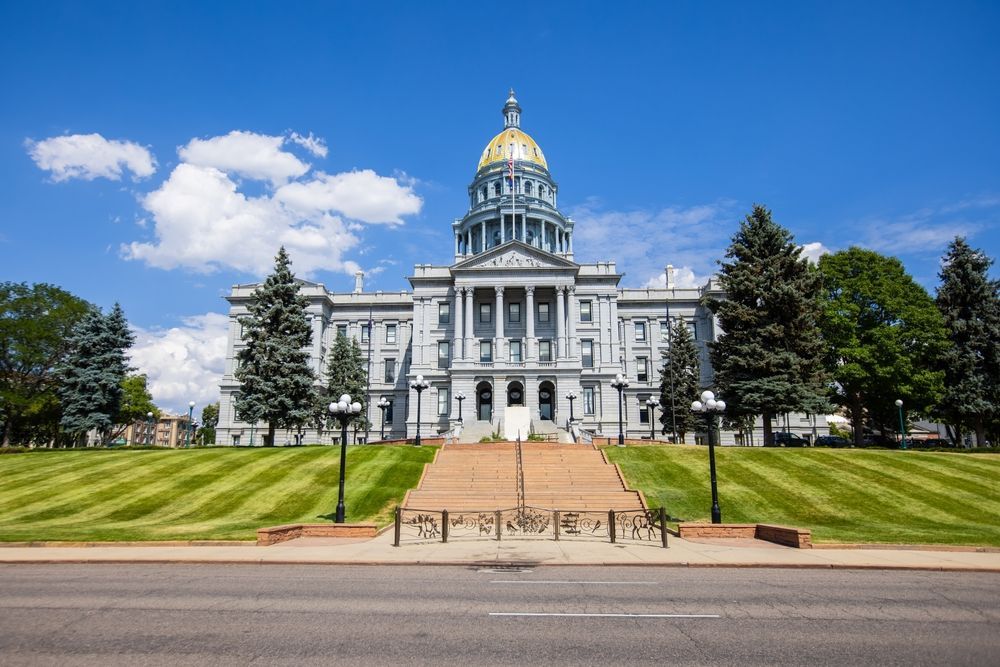
Colorado Wasteful Spending (FY 2024-25)
Department of Corrections: $ 7,995,411 Increase 28.3 FTE
● Transgender Unit and Healthcare
- $2,677,911 to create two transgender living units totaling 148 beds.
- $5,317,500 for “gender-confirming surgical care.
●Clinical Staff Incentives
- $6,312,464 General Fund to provide incentive payments for certain DOC clinical staff up to $25,000.
- The bill includes an increase of $6,312,464 General Fund to provide incentive payments for certain DOC clinical staff up to $25,000.
●HB 24-1389 School Funding 2023-24 for New Arrival Students (immigrants): $24,000,000
- The bill provides $24,000,000 to be distributed to school districts and charter schools for new arrival students. It increases state expenditures and school district funding in the current FY 2023-24 only.
● Office of New Americans Expansion (immigrants): $119,029 General Fund and 1.5 FTE
- $119,029 General Fund and 1.5 FTE for an administrator to manage ONA grants, coordinate with other entities, and identify opportunities for new migrant career pathway enhancement and a full-time program assistant to support the ONA Director.
-This office has had difficulty expending grants.
●SB 24-182 Immigrant Identification Document Issuance: $ 122,855
- The bill changes certain requirements for the issuance of driver licenses or state identification cards to individuals who are not lawfully present in the United States. The bill increases state expenditures for FY 2024-25 and FY 2025-26 only.
●HB 24-1280 Welcome, Reception, Integration, Grant Program:
$ 2,436,862
- The bill creates the Statewide Welcome, Reception, and Integration Grant Program to provide assistance to migrants. It transfers funds in FY 2024-25 only.
●Immigrant Legal Defense Fund: $ 350,000
- Long Bill budget amendment
- A doubling of the fund for FY 2024-25 making a total budget of $700,000. This funding is used for public defense for people facing immigration legal issues. Sponsored by Rep. Mabrey and Sen. Gonzalez.
●Office of Health Equity and Environmental Justice: $ 2,840,715
- Funding for the Office
- Mission: Build partnerships to mobilize community power and transform systems to advance health equity and environmental justice.
- What this office does to advance their mission:
1. Build relationships with communities and across sectors to address root causes of health disparities.
2. Use equity in decision-making and partner with all sectors of government to embed health and equity considerations into their decision-making process.
3. Use data to support the narrative of the social determinants of health and tell the story of what creates health.
4. De-center communications from the English language or any one dominant language, and prioritize language justice when engaging with communities.
5. Develop, implement, and provide guidance on health equity training, practice, and policies within CDPHE and across the state of Colorado.
6. Focus on upstream determinants of health, guided by the Bay Area Regional Health Inequities Initiative.
●HB 24-1197 Department of Public Safety Supplemental: $ 9,800,000
- Funding for Community-based organizations providing service for migrants.
- Funds to provide grants to community-based organizations providing services to people migrating to Colorado.
●Department of Education: $ 56,100,000
- Expanding Healthy Meals for All Program.
- Adds $56.1 million total funds for the Healthy School Meals for All Program, including $40.6 million from the Healthy School Meals for All Program General Fund Exempt Account and $15.5 million from the General Fund. This includes an increase of $56.0 million for meal reimbursements and $100,000 for consulting resources.
●HB 21-1318 Department of Public Health & Environment: $ 198,192
- Outdoor Equity Program
- This bill injected identity politics into access to the outdoors.
●Department of Public Health & Environment: $2,840,715 total funds and 8.3 FTE
- Creating the Office of Health Equity and Environmental Justice by combining two offices.
- The bill includes an increase of $2,840,715 total funds and 8.3 FTE, including a reduction of $11,349 General Fund, to join the Environmental Justice Program with the Office of Health Equity to form the Office of Health Equity and Environmental Justice (OHEEJ) for the purpose of centralizing environmental justice staff. OHEEJ is responsible for ongoing environmental justice work, including administration of environmental health mitigation grants through the Community Impact Cash Fund.
●Department of Revenue: $714,515 total funds and 8.3 FTE
- GENTAX & DRIVES SUPPORT FUNDING: The bill includes an increase of $714,515 total funds and 8.3 FTE, comprised of $442,906 General Fund and $271,609 cash funds from the Colorado DRIVES Vehicle Services. Account, in FY 2024-25. Funds will address the backlog of upgrades and system enhancements to the DRIVES and GenTax systems stemming from legislative, user experience, and system operational demands.
When 800,000 Wrong Ballots Meet a New Tax Measure
About 835,000 voters in four Front Range counties got ballots that included a sales-tax question they are not allowed to vote on. Ballot Issue 7A asks people inside the Front Range Passenger Rail District to approve a permanent 0.333 percent sales and use tax, roughly 33 cents on every $100 of taxable purchases, to fund the Colorado Connector passenger rail line from Pueblo to Fort Collins, along with authority to issue $580 million in bonds. Officials say the tax would raise about $295 million a year.
The question landed on ballots sent to people who live outside the district’s current boundaries. Douglas County mailed roughly 282,800 ineligible ballots, Adams County about 274,000, Arapahoe County about 262,000, and Weld County around 16,000. County clerks and the Secretary of State’s office are now working out how to count only the votes that actually count, with ballot processing already under way and no expected delay in overall results.
The error started with a boundary change. Senate Bill 26-172, signed in late May, narrowed the Front Range Passenger Rail District from broader county territory down to specific municipalities and certain metro districts along the planned route. County clerks need accurate, up-to-date maps from the district when they build ballots. They did not get them. The district’s own website still showed the old map.
District officials have called it a communication failure. They have pointed out that the district is a unique creation under state law and was not required to file maps the same way other taxing districts do. They have also said they should have notified the clerks anyway. The clerks prepared the ballots with the information they had. Arapahoe County elections director Bill Mast later described the scramble as “a fair amount of heartburn,” while noting that election offices deal with problems as they come up.
The Secretary of State’s office has told the four counties to tabulate only votes from registered electors inside the revised boundaries. For most precincts, the software can simply leave the contest out of the reported results. In a small number of split precincts, where some voters are eligible and others are not, clerks are using a mix of replacement ballots already sent, the ballot-style numbers printed on the ballots themselves, and manual separation so that only eligible marks are counted. Voters have been told to mark and return the ballot they received. If someone returns both an original and a replacement, the one that includes 7A is used for the rail question; the rest of the races on either ballot still count. The district has brought in former Jefferson County Clerk Pam Anderson to help coordinate with the counties.
This is a tax and debt question under TABOR. The people who will pay the tax are the ones who are supposed to decide whether it is imposed. When hundreds of thousands of ineligible ballots carry the question, even a careful after-the-fact fix creates avoidable risk and public doubt. No one has claimed that invalid votes will be counted. Clerks and state officials have been clear that only eligible votes will be tallied, and the protocols are being tested. The size of the mistake has still prompted some opponents to call for the measure to be thrown out entirely. That would be a court decision, not an election-office one.
The immediate cause sits with the Front Range Passenger Rail District’s failure to give the clerks the updated boundaries after the Legislature changed them. Unique statutory status does not remove the practical duty to supply the geography election administrators need. Special districts that ask voters to raise taxes and authorize debt should meet the same standard of preparation expected of any other local government.
Election integrity is not a regional issue. Every local government and special district that places a tax or debt question on the ballot has a duty to give complete, current information to the clerks who run the election. When that duty is missed at the scale of 800,000 ballots, the resulting heartburn is felt by voters who simply want the process to match the law.
Accurate boundaries, timely notice, and clear public communication are the baseline for any measure that asks citizens to raise their own taxes. The counties are doing the work of correcting the count. Preventing the next avoidable error belongs to every district and legislature that creates or changes the maps those ballots depend on.