Resolving family legal issues can be stressful and complicated. Emotions run high, and it can be difficult to see the matter clearly. You need objective legal counsel from an experienced family attorney. Call the Law Office of John Williams in Charlotte, NC. John Williams can assist you if you're filing for divorce. He also handles child custody and guardianship cases.
Arrange for a consultation with a divorce attorney in Charlotte, NC today.
State Issues
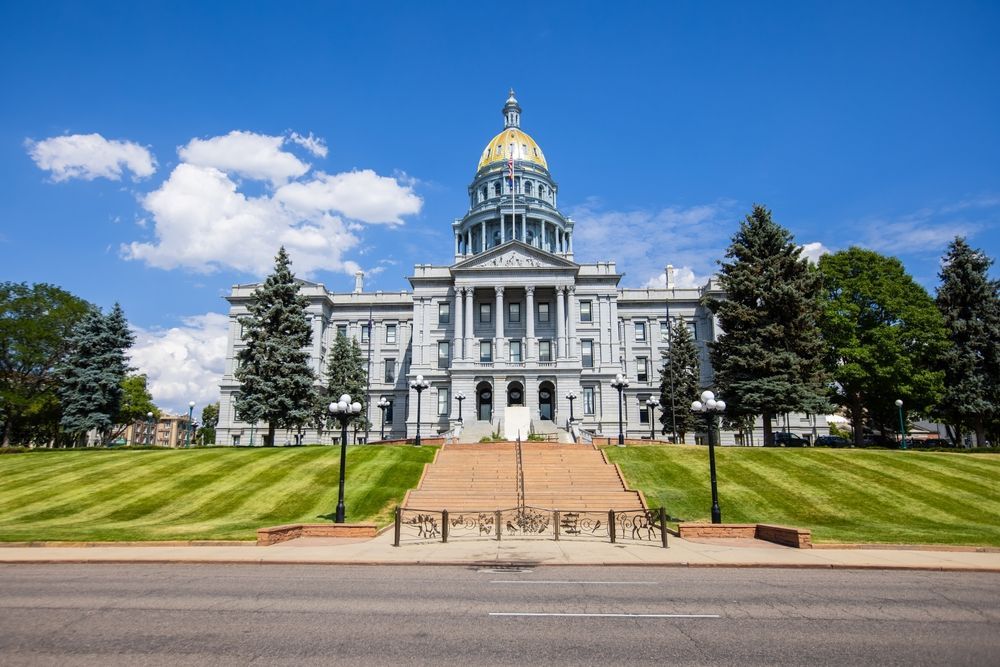
Colorado Wasteful Spending (FY 2024-25)
Department of Corrections: $ 7,995,411 Increase 28.3 FTE
● Transgender Unit and Healthcare
- $2,677,911 to create two transgender living units totaling 148 beds.
- $5,317,500 for “gender-confirming surgical care.
●Clinical Staff Incentives
- $6,312,464 General Fund to provide incentive payments for certain DOC clinical staff up to $25,000.
- The bill includes an increase of $6,312,464 General Fund to provide incentive payments for certain DOC clinical staff up to $25,000.
●HB 24-1389 School Funding 2023-24 for New Arrival Students (immigrants): $24,000,000
- The bill provides $24,000,000 to be distributed to school districts and charter schools for new arrival students. It increases state expenditures and school district funding in the current FY 2023-24 only.
● Office of New Americans Expansion (immigrants): $119,029 General Fund and 1.5 FTE
- $119,029 General Fund and 1.5 FTE for an administrator to manage ONA grants, coordinate with other entities, and identify opportunities for new migrant career pathway enhancement and a full-time program assistant to support the ONA Director.
-This office has had difficulty expending grants.
●SB 24-182 Immigrant Identification Document Issuance: $ 122,855
- The bill changes certain requirements for the issuance of driver licenses or state identification cards to individuals who are not lawfully present in the United States. The bill increases state expenditures for FY 2024-25 and FY 2025-26 only.
●HB 24-1280 Welcome, Reception, Integration, Grant Program:
$ 2,436,862
- The bill creates the Statewide Welcome, Reception, and Integration Grant Program to provide assistance to migrants. It transfers funds in FY 2024-25 only.
●Immigrant Legal Defense Fund: $ 350,000
- Long Bill budget amendment
- A doubling of the fund for FY 2024-25 making a total budget of $700,000. This funding is used for public defense for people facing immigration legal issues. Sponsored by Rep. Mabrey and Sen. Gonzalez.
●Office of Health Equity and Environmental Justice: $ 2,840,715
- Funding for the Office
- Mission: Build partnerships to mobilize community power and transform systems to advance health equity and environmental justice.
- What this office does to advance their mission:
1. Build relationships with communities and across sectors to address root causes of health disparities.
2. Use equity in decision-making and partner with all sectors of government to embed health and equity considerations into their decision-making process.
3. Use data to support the narrative of the social determinants of health and tell the story of what creates health.
4. De-center communications from the English language or any one dominant language, and prioritize language justice when engaging with communities.
5. Develop, implement, and provide guidance on health equity training, practice, and policies within CDPHE and across the state of Colorado.
6. Focus on upstream determinants of health, guided by the Bay Area Regional Health Inequities Initiative.
●HB 24-1197 Department of Public Safety Supplemental: $ 9,800,000
- Funding for Community-based organizations providing service for migrants.
- Funds to provide grants to community-based organizations providing services to people migrating to Colorado.
●Department of Education: $ 56,100,000
- Expanding Healthy Meals for All Program.
- Adds $56.1 million total funds for the Healthy School Meals for All Program, including $40.6 million from the Healthy School Meals for All Program General Fund Exempt Account and $15.5 million from the General Fund. This includes an increase of $56.0 million for meal reimbursements and $100,000 for consulting resources.
●HB 21-1318 Department of Public Health & Environment: $ 198,192
- Outdoor Equity Program
- This bill injected identity politics into access to the outdoors.
●Department of Public Health & Environment: $2,840,715 total funds and 8.3 FTE
- Creating the Office of Health Equity and Environmental Justice by combining two offices.
- The bill includes an increase of $2,840,715 total funds and 8.3 FTE, including a reduction of $11,349 General Fund, to join the Environmental Justice Program with the Office of Health Equity to form the Office of Health Equity and Environmental Justice (OHEEJ) for the purpose of centralizing environmental justice staff. OHEEJ is responsible for ongoing environmental justice work, including administration of environmental health mitigation grants through the Community Impact Cash Fund.
●Department of Revenue: $714,515 total funds and 8.3 FTE
- GENTAX & DRIVES SUPPORT FUNDING: The bill includes an increase of $714,515 total funds and 8.3 FTE, comprised of $442,906 General Fund and $271,609 cash funds from the Colorado DRIVES Vehicle Services. Account, in FY 2024-25. Funds will address the backlog of upgrades and system enhancements to the DRIVES and GenTax systems stemming from legislative, user experience, and system operational demands.
One Board, One Council, One Legislator at a Time
While attending the Colorado Republican Assembly in April 2026, I reflected on how Colorado fell to the radical far left. A conversation with a friend came to mind. In that conversation they described the precise mechanism the left uses to convert our Constitutional Republic into a social democracy, contrary to the vision of the founders.
The U.S. was founded as a Constitutional Republic with power rooted in local government, built from the bottom up rather than imposed from the top down. Although we look to the president for national leadership, the true foundation lies in town councils, school boards, and state legislatures.
Article IV, Section 4 of the United States Constitution guarantees to every state in the Union a Republican Form of Government. The 10th Amendment reinforces this by reserving powers to the states or the people. In Federalist Paper No. 10, James Madison explained the genius of this structure. He warned that a “democracy becomes a spectacle of turbulence and contention, incompatible with personal security or the rights of property”. A republic, by contrast, uses representation to control factions and protect liberty. The founders designed our system to prevent the hidden influence and incremental erosion we witness today.
The Progressive Era Shift to Nonpartisan Elections
During the late 1890s through the 1920s, city elections began shifting to “nonpartisan”. Groups such as the National Municipal League, founded in 1894 promoted model charters that removed party labels from ballots. The stated goal was to combat big-city machines, corruption, and boss control.
On the surface the idea sounded reasonable. Remove politics from local government. Make it businesslike and efficient. In practice the change proved far more dangerous. It stripped away labels and concealed true intentions. Voters could no longer see at a glance whether a candidate aligned with one party or another. The public lost the ability to understand the agenda fully.
How and When the Change Spread
The shift occurred gradually, city by city and state by state. Early experiments began around 1909 to 1912. By 1929 a majority of U.S. cities with populations over 30,000 used nonpartisan elections. By the 1950s more than 60 percent of municipalities nationwide had adopted the system. Today over 75 percent of U.S. municipalities hold nonpartisan elections for city and town councils.
School boards and many special-district boards followed the same pattern. Nonpartisan elections became the norm, now exceeding 90 percent, during the same drive to keep education and local services out of politics.
Colorado-Specific Context
In Colorado, city and town council elections and most local boards have operated under nonpartisan rules for decades.
Denver adopted nonpartisan elections in its 1913 city charter as a Progressive reform against machine politics. Longmont’s charter made elections nonpartisan in 1961. State law has required school board elections to be nonpartisan since 1973. Even without party labels on the ballot, candidates often maintain party affiliations
The One-Sided Nature of Nonpartisanship
What makes this pattern troubling is its one-sided effect. Today it is primarily the left that hides its affiliations behind the label of nonpartisanship. Conservatives remain happy and proud to display their partisan identity. They run openly as Republicans supporting limited government, individual liberty, and the rule of law.
The radical left, by contrast, recognizes that its full agenda of higher taxes, expansive regulations, ideological indoctrination in schools, and the replacement of republican principles with pure majoritarian rule would face rejection if voters saw it clearly. So candidates run without labels. They advance under the radar. They win one board, one council, one school district at a time. Then they use those positions to advance the very changes the founders warned against.
Is This Nefarious or Much Ado About Nothing?
Once in office these officials employ incrementalism to undermine the fabric of our Republic. They replace the word “Republic” with “democracy” in everyday speech. The shift appears benign. It is not. Madison and the founders held strong views on this exact issue, expressed throughout the Federalist Papers and embedded in the Constitution. Democracy invites faction and tyranny of the majority. Our Republic was built to guard against it.
Stripping away labels hides true intentions. The practice is not accidental. It is strategic. The result is a slow, quiet erosion of the Constitutional Republic the founders envisioned. Local government was always meant to be the most transparent and accountable layer of our system. Nonpartisan elections have made it the opposite.
Restoring the Republic: One Board at a Time
We must reverse this trend. Not through a grand federal decree or top-down mandates, but one board, one council, one legislator at a time. We must demand transparency in every local race. We must remind voters that the guarantee of a Republican Form of Government in Article IV, Section 4 is not a suggestion. It forms the foundation of our liberty. The 10th Amendment reserves real power to the people and their local representatives for a reason.
The Progressive Era reformers may have believed they were cleaning up government. In practice they opened the door to undetected infiltration. The left has exploited that opening for decades. The time has come to close it. Let every candidate declare their principles. Let every voter see the labels clearly. Let us restore the bottom-up Constitutional Republic our founders gave us.
One board. One council. One legislator at a time. This is how we reclaim our country.
Michael J. Badagliacco, "MJB"
Michael is a father of five, grandfather of three and a Montrose Colorado City Councilman.
He is also the editor in chief of USALibertyReport.com and remains enamored by the genius of the Constitution.