
Resolving family legal issues can be stressful and complicated. Emotions run high, and it can be difficult to see the matter clearly. You need objective legal counsel from an experienced family attorney. Call the Law Office of John Williams in Charlotte, NC. John Williams can assist you if you're filing for divorce. He also handles child custody and guardianship cases.
Arrange for a consultation with a divorce attorney in Charlotte, NC today.
State Issues
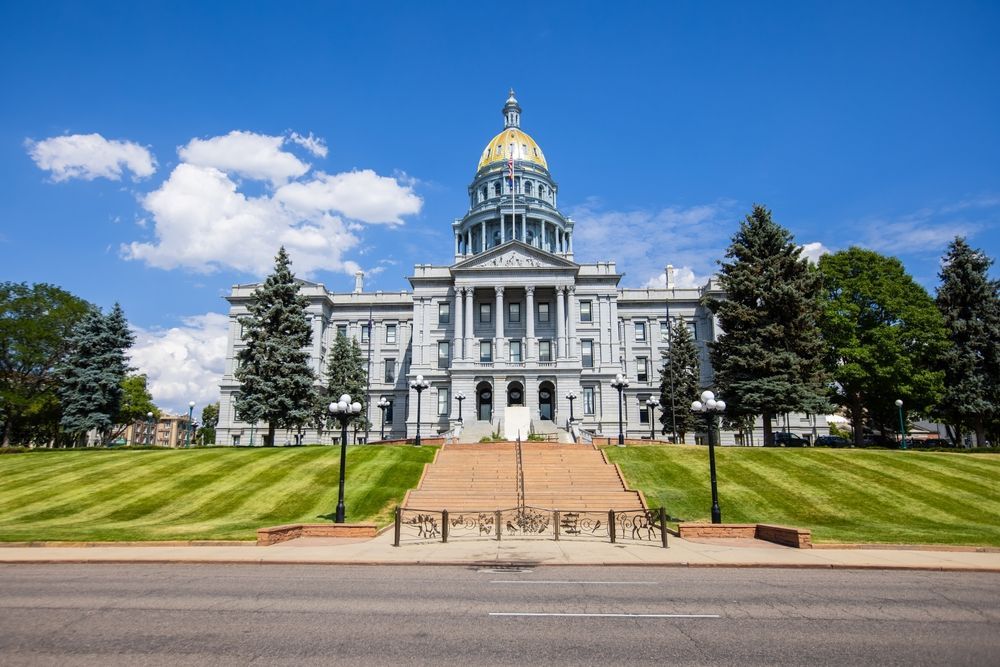
Colorado Wasteful Spending (FY 2024-25)
Department of Corrections: $ 7,995,411 Increase 28.3 FTE
● Transgender Unit and Healthcare
- $2,677,911 to create two transgender living units totaling 148 beds.
- $5,317,500 for “gender-confirming surgical care.
●Clinical Staff Incentives
- $6,312,464 General Fund to provide incentive payments for certain DOC clinical staff up to $25,000.
- The bill includes an increase of $6,312,464 General Fund to provide incentive payments for certain DOC clinical staff up to $25,000.
●HB 24-1389 School Funding 2023-24 for New Arrival Students (immigrants): $24,000,000
- The bill provides $24,000,000 to be distributed to school districts and charter schools for new arrival students. It increases state expenditures and school district funding in the current FY 2023-24 only.
● Office of New Americans Expansion (immigrants): $119,029 General Fund and 1.5 FTE
- $119,029 General Fund and 1.5 FTE for an administrator to manage ONA grants, coordinate with other entities, and identify opportunities for new migrant career pathway enhancement and a full-time program assistant to support the ONA Director.
-This office has had difficulty expending grants.
●SB 24-182 Immigrant Identification Document Issuance: $ 122,855
- The bill changes certain requirements for the issuance of driver licenses or state identification cards to individuals who are not lawfully present in the United States. The bill increases state expenditures for FY 2024-25 and FY 2025-26 only.
●HB 24-1280 Welcome, Reception, Integration, Grant Program:
$ 2,436,862
- The bill creates the Statewide Welcome, Reception, and Integration Grant Program to provide assistance to migrants. It transfers funds in FY 2024-25 only.
●Immigrant Legal Defense Fund: $ 350,000
- Long Bill budget amendment
- A doubling of the fund for FY 2024-25 making a total budget of $700,000. This funding is used for public defense for people facing immigration legal issues. Sponsored by Rep. Mabrey and Sen. Gonzalez.
●Office of Health Equity and Environmental Justice: $ 2,840,715
- Funding for the Office
- Mission: Build partnerships to mobilize community power and transform systems to advance health equity and environmental justice.
- What this office does to advance their mission:
1. Build relationships with communities and across sectors to address root causes of health disparities.
2. Use equity in decision-making and partner with all sectors of government to embed health and equity considerations into their decision-making process.
3. Use data to support the narrative of the social determinants of health and tell the story of what creates health.
4. De-center communications from the English language or any one dominant language, and prioritize language justice when engaging with communities.
5. Develop, implement, and provide guidance on health equity training, practice, and policies within CDPHE and across the state of Colorado.
6. Focus on upstream determinants of health, guided by the Bay Area Regional Health Inequities Initiative.
●HB 24-1197 Department of Public Safety Supplemental: $ 9,800,000
- Funding for Community-based organizations providing service for migrants.
- Funds to provide grants to community-based organizations providing services to people migrating to Colorado.
●Department of Education: $ 56,100,000
- Expanding Healthy Meals for All Program.
- Adds $56.1 million total funds for the Healthy School Meals for All Program, including $40.6 million from the Healthy School Meals for All Program General Fund Exempt Account and $15.5 million from the General Fund. This includes an increase of $56.0 million for meal reimbursements and $100,000 for consulting resources.
●HB 21-1318 Department of Public Health & Environment: $ 198,192
- Outdoor Equity Program
- This bill injected identity politics into access to the outdoors.
●Department of Public Health & Environment: $2,840,715 total funds and 8.3 FTE
- Creating the Office of Health Equity and Environmental Justice by combining two offices.
- The bill includes an increase of $2,840,715 total funds and 8.3 FTE, including a reduction of $11,349 General Fund, to join the Environmental Justice Program with the Office of Health Equity to form the Office of Health Equity and Environmental Justice (OHEEJ) for the purpose of centralizing environmental justice staff. OHEEJ is responsible for ongoing environmental justice work, including administration of environmental health mitigation grants through the Community Impact Cash Fund.
●Department of Revenue: $714,515 total funds and 8.3 FTE
- GENTAX & DRIVES SUPPORT FUNDING: The bill includes an increase of $714,515 total funds and 8.3 FTE, comprised of $442,906 General Fund and $271,609 cash funds from the Colorado DRIVES Vehicle Services. Account, in FY 2024-25. Funds will address the backlog of upgrades and system enhancements to the DRIVES and GenTax systems stemming from legislative, user experience, and system operational demands.
The Straightforward Fix for Colorado River Water
Desalination Powered by Small Modular Reactors
By Michael J Badagliacco, “MJB”
Colorado’s water rights must never become a bargaining chip.
The 1922 Colorado River Compact apportioned 7.5 million acre-feet annually to the Upper Basin, including Colorado, and the same amount to the Lower Basin states. The 1928 Boulder Canyon Project Act fixed specific Lower Basin shares: California 4.4 million acre-feet, Arizona 2.8 million acre-feet, and Nevada 0.3 million acre-feet. The 1948 Upper Colorado River Basin Compact later assigned Colorado roughly 51.75% of the Upper Basin’s share, or about 3.86 million acre-feet. The 1964 Arizona v. California Supreme Court decree confirmed federal oversight of these mainstream allocations while highlighting the need for supply solutions beyond repeated upstream cuts.
Congress authorized the seven basin states to negotiate the Compact in 1921 and formally approved it in Section 13 of the 1928 Boulder Canyon Project Act. This satisfied the constitutional requirement under Article I, Section 10 that interstate compacts receive congressional consent. The framers included this safeguard to maintain federal supremacy while allowing states to resolve practical disputes. The resulting framework became the foundation of the Law of the River. However, the allocations were based on assumptions of much higher river flows and far less development than what exists today. Those original shares now bind Upper Basin states like Colorado to deliveries that no longer reflect current reality or the explosive growth that has occurred downstream.
The Current Crisis
These legal documents assumed average river flows near 16.4 million acre-feet. Actual flows since 2000 average only 12.4 million acre-feet due to drought and Lower Basin temperatures 2.2°F above the twentieth-century average. Combined storage in Lake Mead and Lake Powell fell to just 24% of capacity in 2023, with Lake Powell at 44% of typical levels by late 2025. Both reservoirs are now under declared shortage conditions.
The Lower Basin has undergone dramatic transformation since the 1920s. California and Arizona have built vast urban centers, sprawling suburbs, and intensive agriculture that together consume their full legal shares year after year. Los Angeles, San Diego, Phoenix, and Las Vegas have grown into major metropolitan areas with millions of residents, extensive golf courses, swimming pools, lawns, and commercial landscapes that demand reliable water deliveries. Agricultural production has expanded dramatically, supported by the very deliveries the Upper Basin is obligated to provide. This development far exceeds what declining natural flows can sustainably support. Upper Basin states like Colorado continue to deliver water while using less than their full entitlement, creating unsustainable pressure on Colorado communities, farms, and future economic growth.
A Proven Technology for New Supply
Reverse osmosis desalination has operated commercially for more than fifty years. The Carlsbad Desalination Plant, completed in 2015 at roughly $1 billion, produces 50 million gallons per day (approximately 56,000 acre-feet annually) using about 3,500 kilowatt-hours per acre-foot. It supplies roughly 7% of San Diego County’s needs. Multiple coastal facilities could generate millions of additional acre-feet yearly for direct delivery to the Los Angeles Basin or for pumping into Lake Powell and Lake Mead, restoring storage without further taxing Colorado’s apportionment.
Powering Plants with Safe, Compact Nuclear Reactors
Power demands pose no barrier. Small modular reactors such as NuScale designs are factory-built units roughly the size of a semi-trailer. One module can support desalination output of about 150 million gallons per day. Placing two units per offshore platform delivers full redundancy, complete energy independence and zero added strain on the power grid. These reactors are safe, emissions-free, and economically competitive over their lifespan.
The Real Cost of Inaction
In discussions with Congressman Jeff Hurd of Colorado’s 3rd District, he cited prohibitive expense and grid strain as the main reasons for not advancing desalination. Yet the cost of continued inaction is far higher. Water use across the basin generates more than $20 billion in annual economic benefits, with urban sectors alone contributing $18.3 billion. Past droughts have already slashed crop acreage, raised food costs, and imposed billions of dollars in direct losses on agriculture and communities in California, Arizona, and Colorado. Prolonged shortages risk public health impacts and irreversible economic contraction.
Leadership That Seeks Solutions
Some, including Congressman Jeff Hurd, have responded to such proposals with excuses about cost and infrastructure instead of championing solutions. The National Environmental Policy Act and existing coastal permitting processes proved workable after thorough review; similar diligence can advance new plants and co-located nuclear platforms.
The Earth’s surface is two-thirds water. The legal framework exists. The engineering is mature. Colorado’s water belongs to Colorado under the Law of the River. By pursuing large-scale desalination powered by small modular reactors, the basin can achieve genuine abundance while ending the annual cycle of crisis and concession. The solution is simple and long overdue.