
Resolving family legal issues can be stressful and complicated. Emotions run high, and it can be difficult to see the matter clearly. You need objective legal counsel from an experienced family attorney. Call the Law Office of John Williams in Charlotte, NC. John Williams can assist you if you're filing for divorce. He also handles child custody and guardianship cases.
Arrange for a consultation with a divorce attorney in Charlotte, NC today.
State Issues
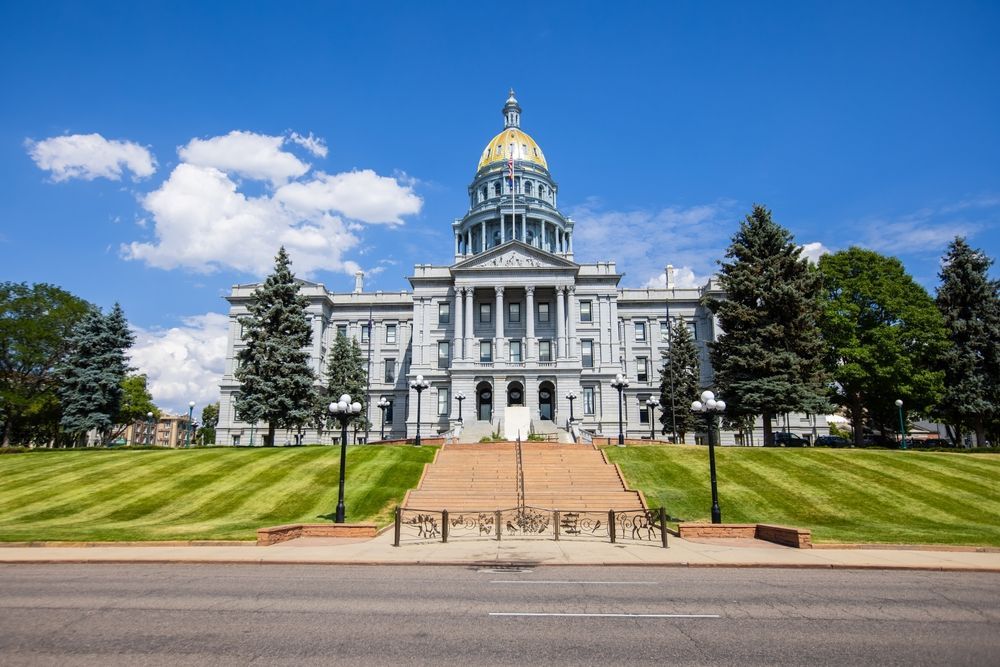
Colorado Wasteful Spending (FY 2024-25)
Department of Corrections: $ 7,995,411 Increase 28.3 FTE
● Transgender Unit and Healthcare
- $2,677,911 to create two transgender living units totaling 148 beds.
- $5,317,500 for “gender-confirming surgical care.
●Clinical Staff Incentives
- $6,312,464 General Fund to provide incentive payments for certain DOC clinical staff up to $25,000.
- The bill includes an increase of $6,312,464 General Fund to provide incentive payments for certain DOC clinical staff up to $25,000.
●HB 24-1389 School Funding 2023-24 for New Arrival Students (immigrants): $24,000,000
- The bill provides $24,000,000 to be distributed to school districts and charter schools for new arrival students. It increases state expenditures and school district funding in the current FY 2023-24 only.
● Office of New Americans Expansion (immigrants): $119,029 General Fund and 1.5 FTE
- $119,029 General Fund and 1.5 FTE for an administrator to manage ONA grants, coordinate with other entities, and identify opportunities for new migrant career pathway enhancement and a full-time program assistant to support the ONA Director.
-This office has had difficulty expending grants.
●SB 24-182 Immigrant Identification Document Issuance: $ 122,855
- The bill changes certain requirements for the issuance of driver licenses or state identification cards to individuals who are not lawfully present in the United States. The bill increases state expenditures for FY 2024-25 and FY 2025-26 only.
●HB 24-1280 Welcome, Reception, Integration, Grant Program:
$ 2,436,862
- The bill creates the Statewide Welcome, Reception, and Integration Grant Program to provide assistance to migrants. It transfers funds in FY 2024-25 only.
●Immigrant Legal Defense Fund: $ 350,000
- Long Bill budget amendment
- A doubling of the fund for FY 2024-25 making a total budget of $700,000. This funding is used for public defense for people facing immigration legal issues. Sponsored by Rep. Mabrey and Sen. Gonzalez.
●Office of Health Equity and Environmental Justice: $ 2,840,715
- Funding for the Office
- Mission: Build partnerships to mobilize community power and transform systems to advance health equity and environmental justice.
- What this office does to advance their mission:
1. Build relationships with communities and across sectors to address root causes of health disparities.
2. Use equity in decision-making and partner with all sectors of government to embed health and equity considerations into their decision-making process.
3. Use data to support the narrative of the social determinants of health and tell the story of what creates health.
4. De-center communications from the English language or any one dominant language, and prioritize language justice when engaging with communities.
5. Develop, implement, and provide guidance on health equity training, practice, and policies within CDPHE and across the state of Colorado.
6. Focus on upstream determinants of health, guided by the Bay Area Regional Health Inequities Initiative.
●HB 24-1197 Department of Public Safety Supplemental: $ 9,800,000
- Funding for Community-based organizations providing service for migrants.
- Funds to provide grants to community-based organizations providing services to people migrating to Colorado.
●Department of Education: $ 56,100,000
- Expanding Healthy Meals for All Program.
- Adds $56.1 million total funds for the Healthy School Meals for All Program, including $40.6 million from the Healthy School Meals for All Program General Fund Exempt Account and $15.5 million from the General Fund. This includes an increase of $56.0 million for meal reimbursements and $100,000 for consulting resources.
●HB 21-1318 Department of Public Health & Environment: $ 198,192
- Outdoor Equity Program
- This bill injected identity politics into access to the outdoors.
●Department of Public Health & Environment: $2,840,715 total funds and 8.3 FTE
- Creating the Office of Health Equity and Environmental Justice by combining two offices.
- The bill includes an increase of $2,840,715 total funds and 8.3 FTE, including a reduction of $11,349 General Fund, to join the Environmental Justice Program with the Office of Health Equity to form the Office of Health Equity and Environmental Justice (OHEEJ) for the purpose of centralizing environmental justice staff. OHEEJ is responsible for ongoing environmental justice work, including administration of environmental health mitigation grants through the Community Impact Cash Fund.
●Department of Revenue: $714,515 total funds and 8.3 FTE
- GENTAX & DRIVES SUPPORT FUNDING: The bill includes an increase of $714,515 total funds and 8.3 FTE, comprised of $442,906 General Fund and $271,609 cash funds from the Colorado DRIVES Vehicle Services. Account, in FY 2024-25. Funds will address the backlog of upgrades and system enhancements to the DRIVES and GenTax systems stemming from legislative, user experience, and system operational demands.
Proposition 108:
An Assault on Associational Freedom
Proposition 108 in Colorado undermines a core constitutional protection: the right of the people to freely associate. Passed by voters in 2016, the measure allows unaffiliated electors to participate in the primary elections of major political parties without declaring affiliation. Unaffiliated voters may simply choose one party’s ballot on primary day and help select that party’s nominees for the general election. This system forces parties to accept the influence of outsiders who have deliberately chosen not to join. Such compulsion violates the First Amendment’s guarantee of freedom of association, a right the Supreme Court has long applied to political parties and enforced against the states through the Fourteenth Amendment.
What Proposition 108 Did:
The measure created a semi-open primary system. Unaffiliated voters retain full flexibility to cross over into any party’s primary without ever affiliating. This semi-open primary scheme allows non-affiliated voters to avoid committing to the core principles that the major parties hold. If unaffiliated voters are so committed to remaining outside any major party, they should establish a third party that reflects their core values and advance candidates who represent them. Instead, they try to force the major parties to conform by disrupting the core values established by the membership itself. The reality is that unaffiliated voters want to have their cake and eat it too. That is not representative government. That is the undermining of institutions that seek to establish and maintain the core values their members believe in.
The rise in unaffiliated voters in Colorado stems almost entirely from two factors: automatic mandatory unaffiliated registration through the DMV and a widespread appetite for non-committal attitudes toward adhering to any set of principles.
The Constitutional Right to Free Association:
The freedom to associate includes the freedom not to associate. In NAACP v. Alabama ex rel. Patterson (1958), the Supreme Court recognized that compelled disclosure of membership lists would chill the exercise of this right and struck down the state’s demand. Political parties stand at the heart of this protection. They are voluntary associations formed to advance shared political beliefs. Their ability to select nominees is an internal affair that defines their message to the electorate. When the state opens that process to nonmembers, it compels unwanted association and risks diluting the party’s voice.
Supreme Court Precedent on Party Autonomy:
The leading precedent is California Democratic Party v. Jones (2000). In that case, the Supreme Court invalidated California’s blanket primary system, which permitted all voters, regardless of affiliation, to vote for any candidate in any party’s primary. Justice Antonin Scalia, writing for the Court, declared that such a system imposed “a severe burden” on associational freedom. “We can think of no heavier burden on a political party’s associational freedom,” he explained. Although Colorado’s system is semi-open rather than blanket, the constitutional injury is the same: unaffiliated voters who rejected party membership still decide who will represent the party on the ballot.
The Supreme Court has never held that states may force parties to include nonmembers against their will. To the contrary, in Tashjian v. Republican Party of Connecticut (1986), the Court protected a party’s right to invite independent voters into its primary over the state’s objection. The decision affirmed that parties, not the government, control the boundaries of their association. Colorado’s Proposition 108 reversed that principle.
Recent Federal Court Ruling:
A 2026 federal court ruling in Colorado Republican Party v. Griswold confirmed the problem. U.S. District Judge Philip A. Brimmer struck down the statutory requirement that 75 percent of a party’s central committee must vote to opt out of the open primary. The judge found that this high threshold itself imposed an unconstitutional burden on associational rights, making it “highly unlikely” that parties could ever reclaim control of their nominations. While the ruling did not invalidate the entire measure, it underscored how Proposition 108 systematically burdens the very rights the First Amendment safeguards.
Rebutting Proponents’ Arguments:
Proponents of open primaries often cite the state’s interest in broader voter participation and preventing extremism. Yet the Supreme Court has repeatedly held that such interests cannot justify severe burdens on core associational freedoms. In Jones, the Court rejected the notion that forcing parties to broaden their appeal served a compelling state interest sufficient to override First Amendment protections. Parties remain free to open their primaries voluntarily or to select nominees by convention or assembly. Unaffiliated voters retain every right to participate in the political process through affiliation or independent candidacy. What they may not do is demand a voice inside an organization they have chosen not to join.
Either way, and for both reasons, Proposition 108 should be struck down as unconstitutional. At the very least, U.S. District Judge Philip A. Brimmer’s ruling should be upheld as the starting point for releasing the stranglehold of non-members voting to alter the results of primaries of parties they are not members of. The heart and soul of our Constitutional Republic is at stake. Many seek to convert that Constitutional Republic into a “democracy” that our founders despised. The First Amendment does not tolerate such interference. Courts should restore to Colorado’s political parties the fundamental right to define themselves. Until then, the measure remains a direct affront to the constitutional guarantee of free association.