
Resolving family legal issues can be stressful and complicated. Emotions run high, and it can be difficult to see the matter clearly. You need objective legal counsel from an experienced family attorney. Call the Law Office of John Williams in Charlotte, NC. John Williams can assist you if you're filing for divorce. He also handles child custody and guardianship cases.
Arrange for a consultation with a divorce attorney in Charlotte, NC today.
State Issues
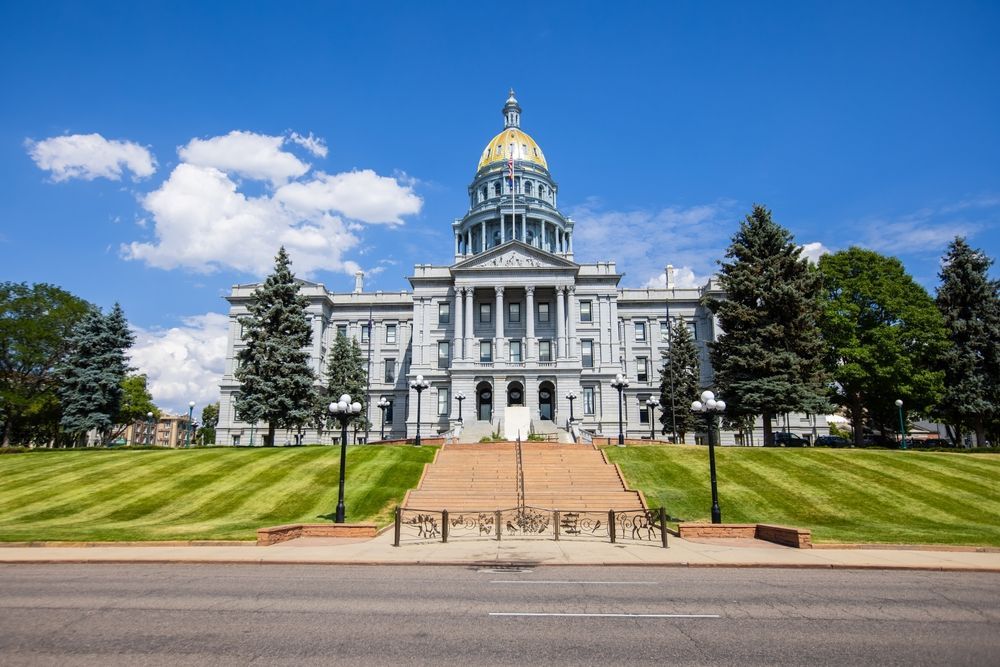
Colorado Wasteful Spending (FY 2024-25)
Department of Corrections: $ 7,995,411 Increase 28.3 FTE
● Transgender Unit and Healthcare
- $2,677,911 to create two transgender living units totaling 148 beds.
- $5,317,500 for “gender-confirming surgical care.
●Clinical Staff Incentives
- $6,312,464 General Fund to provide incentive payments for certain DOC clinical staff up to $25,000.
- The bill includes an increase of $6,312,464 General Fund to provide incentive payments for certain DOC clinical staff up to $25,000.
●HB 24-1389 School Funding 2023-24 for New Arrival Students (immigrants): $24,000,000
- The bill provides $24,000,000 to be distributed to school districts and charter schools for new arrival students. It increases state expenditures and school district funding in the current FY 2023-24 only.
● Office of New Americans Expansion (immigrants): $119,029 General Fund and 1.5 FTE
- $119,029 General Fund and 1.5 FTE for an administrator to manage ONA grants, coordinate with other entities, and identify opportunities for new migrant career pathway enhancement and a full-time program assistant to support the ONA Director.
-This office has had difficulty expending grants.
●SB 24-182 Immigrant Identification Document Issuance: $ 122,855
- The bill changes certain requirements for the issuance of driver licenses or state identification cards to individuals who are not lawfully present in the United States. The bill increases state expenditures for FY 2024-25 and FY 2025-26 only.
●HB 24-1280 Welcome, Reception, Integration, Grant Program:
$ 2,436,862
- The bill creates the Statewide Welcome, Reception, and Integration Grant Program to provide assistance to migrants. It transfers funds in FY 2024-25 only.
●Immigrant Legal Defense Fund: $ 350,000
- Long Bill budget amendment
- A doubling of the fund for FY 2024-25 making a total budget of $700,000. This funding is used for public defense for people facing immigration legal issues. Sponsored by Rep. Mabrey and Sen. Gonzalez.
●Office of Health Equity and Environmental Justice: $ 2,840,715
- Funding for the Office
- Mission: Build partnerships to mobilize community power and transform systems to advance health equity and environmental justice.
- What this office does to advance their mission:
1. Build relationships with communities and across sectors to address root causes of health disparities.
2. Use equity in decision-making and partner with all sectors of government to embed health and equity considerations into their decision-making process.
3. Use data to support the narrative of the social determinants of health and tell the story of what creates health.
4. De-center communications from the English language or any one dominant language, and prioritize language justice when engaging with communities.
5. Develop, implement, and provide guidance on health equity training, practice, and policies within CDPHE and across the state of Colorado.
6. Focus on upstream determinants of health, guided by the Bay Area Regional Health Inequities Initiative.
●HB 24-1197 Department of Public Safety Supplemental: $ 9,800,000
- Funding for Community-based organizations providing service for migrants.
- Funds to provide grants to community-based organizations providing services to people migrating to Colorado.
●Department of Education: $ 56,100,000
- Expanding Healthy Meals for All Program.
- Adds $56.1 million total funds for the Healthy School Meals for All Program, including $40.6 million from the Healthy School Meals for All Program General Fund Exempt Account and $15.5 million from the General Fund. This includes an increase of $56.0 million for meal reimbursements and $100,000 for consulting resources.
●HB 21-1318 Department of Public Health & Environment: $ 198,192
- Outdoor Equity Program
- This bill injected identity politics into access to the outdoors.
●Department of Public Health & Environment: $2,840,715 total funds and 8.3 FTE
- Creating the Office of Health Equity and Environmental Justice by combining two offices.
- The bill includes an increase of $2,840,715 total funds and 8.3 FTE, including a reduction of $11,349 General Fund, to join the Environmental Justice Program with the Office of Health Equity to form the Office of Health Equity and Environmental Justice (OHEEJ) for the purpose of centralizing environmental justice staff. OHEEJ is responsible for ongoing environmental justice work, including administration of environmental health mitigation grants through the Community Impact Cash Fund.
●Department of Revenue: $714,515 total funds and 8.3 FTE
- GENTAX & DRIVES SUPPORT FUNDING: The bill includes an increase of $714,515 total funds and 8.3 FTE, comprised of $442,906 General Fund and $271,609 cash funds from the Colorado DRIVES Vehicle Services. Account, in FY 2024-25. Funds will address the backlog of upgrades and system enhancements to the DRIVES and GenTax systems stemming from legislative, user experience, and system operational demands.
Colorado's Quiet Decline:
From Dream State to living on the Brink
The Migration Reversal
For decades, Colorado served as a premier destination for ambitious Americans. Its majestic mountains, thriving tech sector, and steady influx of newcomers, especially from California, drove rapid population growth and economic expansion. Yet by 2025, that dream had quietly unraveled. For the first time in 36 years, more people left the state than arrived. Net domestic migration fell by more than 50%, with Metro Denver seeing an even steeper decline of around 70%.
The state continues to attract residents from high-cost areas such as California, but it loses them faster to more affordable destinations including Texas, Florida, and Arizona. Those departing are not primarily retirees seeking warmer weather. They are young families, mid-career professionals, and essential workers who sustain vibrant communities. These individuals want similar sunshine, outdoor opportunities, and quality of life without Colorado's punishing costs, from high rents to everyday expenses like a $14 beer.
Slowing Growth and Economic Strain
Other states now actively recruit Colorado transplants. The state's population growth slowed to just 0.4% in 2025, the lowest rate since 1989 and below the national average. This slowdown challenges a government whose budgets, school funding, and infrastructure plans all relied on endless expansion. Fewer workers translate into reduced tax revenue, strained services, and shortages in key roles such as teachers, nurses, police officers, and service staff. Colorado is losing everyday residents who keep the state functioning faster than it is losing high earners.
The Housing Crisis
At the heart of the exodus lies a severe housing shortage. Colorado ranks last in the nation for housing competitiveness, 50th out of 51 jurisdictions including Washington, D.C. The Denver metro area alone faces a deficit of 64,000 to 135,000 housing units. In 2024, it issued only about 16,600 permits, far short of what is required.
Water Limits and Development Barriers
Unlike crises driven solely by politics or demand elsewhere, Colorado's challenges stem from harsh geography: water scarcity. New construction tap fees can reach $65,000 per unit in some areas. These upfront costs make affordable housing projects financially unworkable. Water districts cannot easily reduce fees amid shrinking snowpack and ongoing pressures on the Colorado River Compact. The state remains caught between acute housing shortages and strict water limitations, with no simple fix in sight. Median home prices rank fourth highest nationally, while overall affordability stands at 41st. Essential workers, including baristas, ski instructors, and teachers, often endure long commutes or struggle to find housing they can afford.
Regional Contrasts: The Western Slope as Oasis
Amid these statewide struggles, Colorado's Western Slope offers a striking contrast. Montrose has emerged as a notable growth center, delivering stronger community stability and more balanced expansion than the Front Range. While Denver pursues ambitious progressive policies that have shaped the broader environment, Montrose demonstrates practical approaches to development. The area shows job gains in construction and healthcare, new infrastructure investments, and a lifestyle closer to Colorado's traditional appeal, with lower costs and ready access to the outdoors. Although Grand Junction remains the larger hub, Montrose highlights the grounded progress possible when local priorities guide decisions rather than distant mandates.
Surging Homelessness
The human toll shows clearly in homelessness data. Statewide, the count reached 18,715 people, with a 30% increase in a single year. Family homelessness jumped 134% in 2024, among the sharpest rises in the country. Many of these cases involve working parents and children displaced when rents outpaced wages, not only individuals facing addiction or mental health issues. Encampments have spread beyond Denver into Colorado Springs neighborhoods and mountain towns. Shelter capacity remains inadequate, creating waiting lists even on freezing nights.
Infrastructure Decay
Underlying these pressures is visible infrastructure decline. Roughly 25% of major roads are in poor condition. Seventy-one percent of highway miles have less than 10 years of remaining life before major reconstruction is needed. Drivers face an estimated $7 billion to $11 billion annually in extra vehicle repair costs from potholes and deteriorating pavement. This hidden burden falls hardest on lower-income residents with longer commutes.
A Warning for High-Amenity States
Colorado is not disappearing, but its celebrated "amenity era" is showing clear signs of strain. The lifestyle brand that drew millions now collides with structural limits. As growth slows, the linked forces of housing shortages, water constraints, homelessness, infrastructure failure, and outward migration form a difficult cycle. Other high-amenity states may soon confront similar tests. Colorado offers an early warning about what occurs when assumptions of perpetual expansion meet hard realities. Solving these problems will require innovative approaches that respect the state's natural limits.
Policies and Politics
Once known for traditional, common-sense values, Colorado now grapples with the consequences of left-wing policies. As migration patterns reverse, those who remain bear the heaviest impact. Crumbling infrastructure stands against some of the most beautiful terrain in America. The political shift has reordered priorities and left a trail of challenges reminiscent of cities shaped by far-left governance. The question remains whether the damage can be repaired by those who were here before the changes began.
Michael J Badagliacco, “MJB”