
Resolving family legal issues can be stressful and complicated. Emotions run high, and it can be difficult to see the matter clearly. You need objective legal counsel from an experienced family attorney. Call the Law Office of John Williams in Charlotte, NC. John Williams can assist you if you're filing for divorce. He also handles child custody and guardianship cases.
Arrange for a consultation with a divorce attorney in Charlotte, NC today.
State Issues
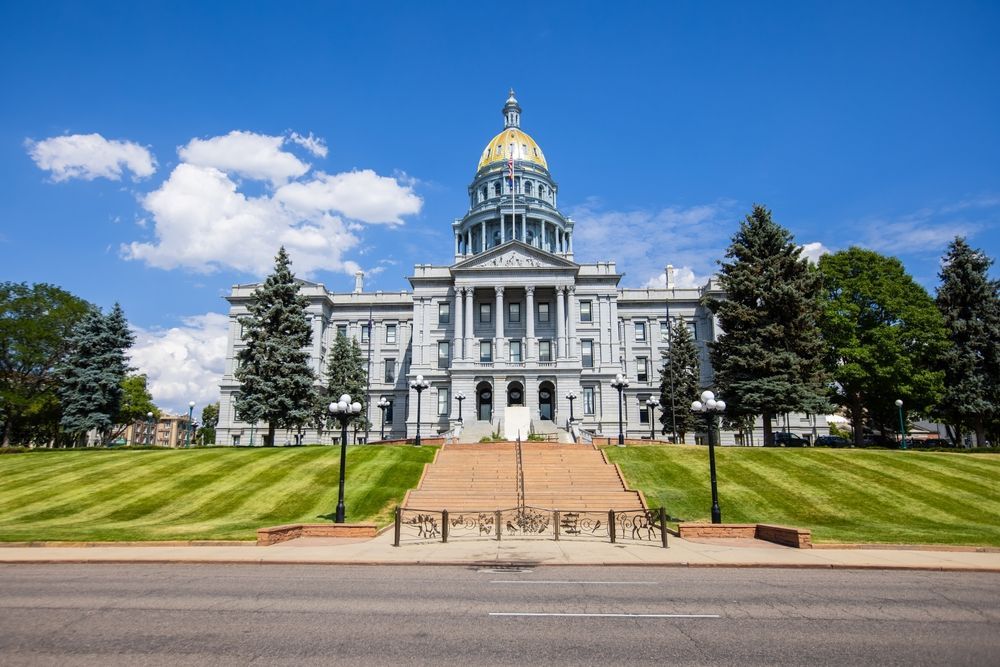
Colorado Wasteful Spending (FY 2024-25)
Department of Corrections: $ 7,995,411 Increase 28.3 FTE
● Transgender Unit and Healthcare
- $2,677,911 to create two transgender living units totaling 148 beds.
- $5,317,500 for “gender-confirming surgical care.
●Clinical Staff Incentives
- $6,312,464 General Fund to provide incentive payments for certain DOC clinical staff up to $25,000.
- The bill includes an increase of $6,312,464 General Fund to provide incentive payments for certain DOC clinical staff up to $25,000.
●HB 24-1389 School Funding 2023-24 for New Arrival Students (immigrants): $24,000,000
- The bill provides $24,000,000 to be distributed to school districts and charter schools for new arrival students. It increases state expenditures and school district funding in the current FY 2023-24 only.
● Office of New Americans Expansion (immigrants): $119,029 General Fund and 1.5 FTE
- $119,029 General Fund and 1.5 FTE for an administrator to manage ONA grants, coordinate with other entities, and identify opportunities for new migrant career pathway enhancement and a full-time program assistant to support the ONA Director.
-This office has had difficulty expending grants.
●SB 24-182 Immigrant Identification Document Issuance: $ 122,855
- The bill changes certain requirements for the issuance of driver licenses or state identification cards to individuals who are not lawfully present in the United States. The bill increases state expenditures for FY 2024-25 and FY 2025-26 only.
●HB 24-1280 Welcome, Reception, Integration, Grant Program:
$ 2,436,862
- The bill creates the Statewide Welcome, Reception, and Integration Grant Program to provide assistance to migrants. It transfers funds in FY 2024-25 only.
●Immigrant Legal Defense Fund: $ 350,000
- Long Bill budget amendment
- A doubling of the fund for FY 2024-25 making a total budget of $700,000. This funding is used for public defense for people facing immigration legal issues. Sponsored by Rep. Mabrey and Sen. Gonzalez.
●Office of Health Equity and Environmental Justice: $ 2,840,715
- Funding for the Office
- Mission: Build partnerships to mobilize community power and transform systems to advance health equity and environmental justice.
- What this office does to advance their mission:
1. Build relationships with communities and across sectors to address root causes of health disparities.
2. Use equity in decision-making and partner with all sectors of government to embed health and equity considerations into their decision-making process.
3. Use data to support the narrative of the social determinants of health and tell the story of what creates health.
4. De-center communications from the English language or any one dominant language, and prioritize language justice when engaging with communities.
5. Develop, implement, and provide guidance on health equity training, practice, and policies within CDPHE and across the state of Colorado.
6. Focus on upstream determinants of health, guided by the Bay Area Regional Health Inequities Initiative.
●HB 24-1197 Department of Public Safety Supplemental: $ 9,800,000
- Funding for Community-based organizations providing service for migrants.
- Funds to provide grants to community-based organizations providing services to people migrating to Colorado.
●Department of Education: $ 56,100,000
- Expanding Healthy Meals for All Program.
- Adds $56.1 million total funds for the Healthy School Meals for All Program, including $40.6 million from the Healthy School Meals for All Program General Fund Exempt Account and $15.5 million from the General Fund. This includes an increase of $56.0 million for meal reimbursements and $100,000 for consulting resources.
●HB 21-1318 Department of Public Health & Environment: $ 198,192
- Outdoor Equity Program
- This bill injected identity politics into access to the outdoors.
●Department of Public Health & Environment: $2,840,715 total funds and 8.3 FTE
- Creating the Office of Health Equity and Environmental Justice by combining two offices.
- The bill includes an increase of $2,840,715 total funds and 8.3 FTE, including a reduction of $11,349 General Fund, to join the Environmental Justice Program with the Office of Health Equity to form the Office of Health Equity and Environmental Justice (OHEEJ) for the purpose of centralizing environmental justice staff. OHEEJ is responsible for ongoing environmental justice work, including administration of environmental health mitigation grants through the Community Impact Cash Fund.
●Department of Revenue: $714,515 total funds and 8.3 FTE
- GENTAX & DRIVES SUPPORT FUNDING: The bill includes an increase of $714,515 total funds and 8.3 FTE, comprised of $442,906 General Fund and $271,609 cash funds from the Colorado DRIVES Vehicle Services. Account, in FY 2024-25. Funds will address the backlog of upgrades and system enhancements to the DRIVES and GenTax systems stemming from legislative, user experience, and system operational demands.
Colorado’s Accelerating Business Exodus
The Colorado Chamber of Commerce Foundation released its 2025 Relocation Tracker on April 6. The report provides a systematic, sourced, and documented accounting of every company that has left Colorado, reduced its operations here, or chosen a competitor state since 2019.
The Scale of the Losses
The tracker documents 98 companies that departed or bypassed Colorado for growth opportunities. These decisions have cost the state at least 13,607 known jobs. More than half of the companies, 54.5 percent, separated entirely from Colorado. The true number of jobs affected is likely higher. Many firms quietly scale back or relocate without issuing public announcements. The Chamber compiled the data from SEC filings, WARN Act notices, press releases, and news reports. The report also notes a net loss of 34 public company headquarters in Colorado since 2022.
Pace of Departures Quickens
The trend is worsening. Roughly 15 companies left or chose elsewhere in 2019. The numbers dipped temporarily during the COVID period before climbing steadily. There were 21 departures in 2024. In 2025 alone, the tracker recorded 27 cases, the highest single-year total in its history. The pace continues to accelerate.
Why Companies Are Leaving
What sets this report apart is its documentation of the reasons companies gave in their own words. Recurring themes include burdensome regulations, rising compliance costs, and a perception that other states offer a more favorable environment. One firm cited “increasing costs related to complying with regulations in the State of Colorado and forecasted rate increases.” Another stated that operations here were “no longer financially viable.” Desert Harvest moved its full operations to North Carolina after new laws made continued business in Colorado unfeasible. Several public power districts pointed to regulatory costs and rate hikes as decisive factors. These explanations show that state policy decisions are playing a direct role.
Competitor States Benefit
Texas has captured 21 of the relocating companies, by far the largest share.
North Carolina, Arizona, and Florida have also gained significantly from Colorado’s losses.
The Legislative Driver
While some blame the governor, the real problem lies with the Democratic majorities in the state legislature. Lawmakers have advanced bills that mirror California’s regulatory approach, imposing higher costs and restrictions on energy, labor, housing development, and business operations. These measures have turned Colorado into a cautionary tale that now risks surpassing California in business unfriendliness. A recent Chamber survey found that 26 percent of Colorado employers are considering out-of-state investments, up from 17 percent the year before.
Time to Focus on Solutions
As Colorado becomes less competitive, voters must turn their attention to the 2026 legislative races. That is where the bills shaping the state’s business climate are written. Lawmakers need to prioritize regulatory reform, tax competitiveness, and support for job creators. Without change, the state will continue to lose ground to states that offer lower costs, fewer hurdles, and stronger support for businesses.
The full 2025 Relocation Tracker is available on the Colorado Chamber of Commerce website. Its data-driven findings and company statements leave little room for debate. Colorado’s business climate is actively repelling investment, and the companies voting with their feet have explained precisely why. The time for action is now.