
Resolving family legal issues can be stressful and complicated. Emotions run high, and it can be difficult to see the matter clearly. You need objective legal counsel from an experienced family attorney. Call the Law Office of John Williams in Charlotte, NC. John Williams can assist you if you're filing for divorce. He also handles child custody and guardianship cases.
Arrange for a consultation with a divorce attorney in Charlotte, NC today.
State Issues
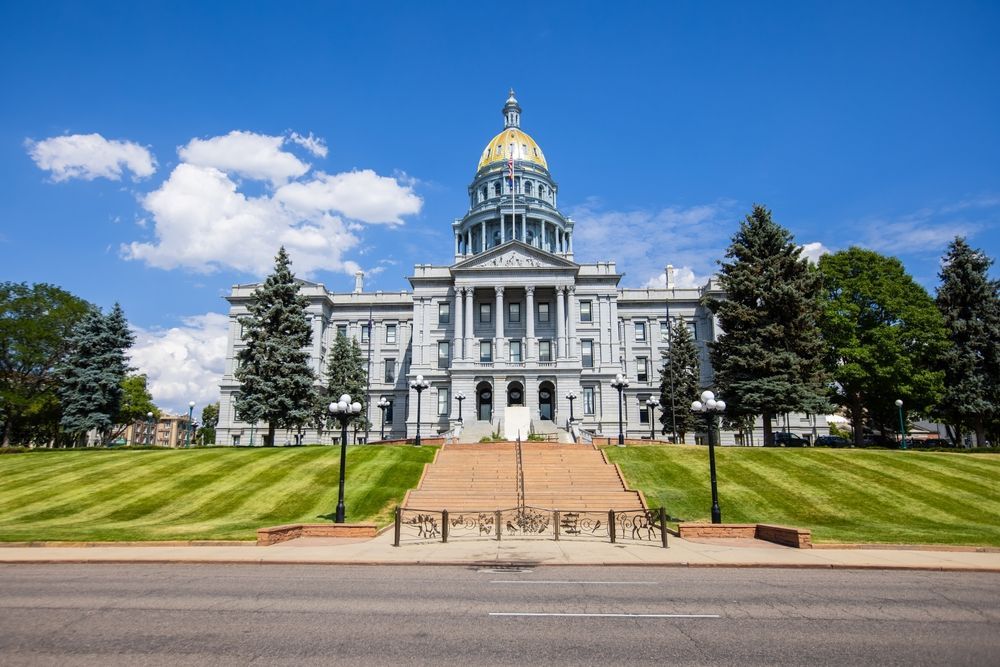
Colorado Wasteful Spending (FY 2024-25)
Department of Corrections: $ 7,995,411 Increase 28.3 FTE
● Transgender Unit and Healthcare
- $2,677,911 to create two transgender living units totaling 148 beds.
- $5,317,500 for “gender-confirming surgical care.
●Clinical Staff Incentives
- $6,312,464 General Fund to provide incentive payments for certain DOC clinical staff up to $25,000.
- The bill includes an increase of $6,312,464 General Fund to provide incentive payments for certain DOC clinical staff up to $25,000.
●HB 24-1389 School Funding 2023-24 for New Arrival Students (immigrants): $24,000,000
- The bill provides $24,000,000 to be distributed to school districts and charter schools for new arrival students. It increases state expenditures and school district funding in the current FY 2023-24 only.
● Office of New Americans Expansion (immigrants): $119,029 General Fund and 1.5 FTE
- $119,029 General Fund and 1.5 FTE for an administrator to manage ONA grants, coordinate with other entities, and identify opportunities for new migrant career pathway enhancement and a full-time program assistant to support the ONA Director.
-This office has had difficulty expending grants.
●SB 24-182 Immigrant Identification Document Issuance: $ 122,855
- The bill changes certain requirements for the issuance of driver licenses or state identification cards to individuals who are not lawfully present in the United States. The bill increases state expenditures for FY 2024-25 and FY 2025-26 only.
●HB 24-1280 Welcome, Reception, Integration, Grant Program:
$ 2,436,862
- The bill creates the Statewide Welcome, Reception, and Integration Grant Program to provide assistance to migrants. It transfers funds in FY 2024-25 only.
●Immigrant Legal Defense Fund: $ 350,000
- Long Bill budget amendment
- A doubling of the fund for FY 2024-25 making a total budget of $700,000. This funding is used for public defense for people facing immigration legal issues. Sponsored by Rep. Mabrey and Sen. Gonzalez.
●Office of Health Equity and Environmental Justice: $ 2,840,715
- Funding for the Office
- Mission: Build partnerships to mobilize community power and transform systems to advance health equity and environmental justice.
- What this office does to advance their mission:
1. Build relationships with communities and across sectors to address root causes of health disparities.
2. Use equity in decision-making and partner with all sectors of government to embed health and equity considerations into their decision-making process.
3. Use data to support the narrative of the social determinants of health and tell the story of what creates health.
4. De-center communications from the English language or any one dominant language, and prioritize language justice when engaging with communities.
5. Develop, implement, and provide guidance on health equity training, practice, and policies within CDPHE and across the state of Colorado.
6. Focus on upstream determinants of health, guided by the Bay Area Regional Health Inequities Initiative.
●HB 24-1197 Department of Public Safety Supplemental: $ 9,800,000
- Funding for Community-based organizations providing service for migrants.
- Funds to provide grants to community-based organizations providing services to people migrating to Colorado.
●Department of Education: $ 56,100,000
- Expanding Healthy Meals for All Program.
- Adds $56.1 million total funds for the Healthy School Meals for All Program, including $40.6 million from the Healthy School Meals for All Program General Fund Exempt Account and $15.5 million from the General Fund. This includes an increase of $56.0 million for meal reimbursements and $100,000 for consulting resources.
●HB 21-1318 Department of Public Health & Environment: $ 198,192
- Outdoor Equity Program
- This bill injected identity politics into access to the outdoors.
●Department of Public Health & Environment: $2,840,715 total funds and 8.3 FTE
- Creating the Office of Health Equity and Environmental Justice by combining two offices.
- The bill includes an increase of $2,840,715 total funds and 8.3 FTE, including a reduction of $11,349 General Fund, to join the Environmental Justice Program with the Office of Health Equity to form the Office of Health Equity and Environmental Justice (OHEEJ) for the purpose of centralizing environmental justice staff. OHEEJ is responsible for ongoing environmental justice work, including administration of environmental health mitigation grants through the Community Impact Cash Fund.
●Department of Revenue: $714,515 total funds and 8.3 FTE
- GENTAX & DRIVES SUPPORT FUNDING: The bill includes an increase of $714,515 total funds and 8.3 FTE, comprised of $442,906 General Fund and $271,609 cash funds from the Colorado DRIVES Vehicle Services. Account, in FY 2024-25. Funds will address the backlog of upgrades and system enhancements to the DRIVES and GenTax systems stemming from legislative, user experience, and system operational demands.
AI Data Centers: Much Ado About Nothing?
by Michael J. Badagliacco, “MJB”
Concerns about artificial intelligence data centers center on demands for water and electricity as well as questions around surveillance. These issues deserve thoughtful consideration. Many rest on outdated assumptions about facility operations. Practical engineering solutions already resolve most resource challenges, while surveillance discussions benefit from recognizing technologies in common daily use. With clear analysis and established approaches, the difficulties appear more manageable than some reports suggest.
Resource Demands in Perspective
Data centers consume meaningful amounts of electricity and, in traditional configurations, water. Global data center electricity consumption stood at roughly 415 terawatt hours in 2024, or about 1.5 percent of worldwide use, per International Energy Agency estimates. AI development continues to drive growth. Large facilities have required millions of liters of water daily for cooling in some areas. These concentrated demands are real.
Water Solutions Through Closed Loop Systems
Water use responds well to contemporary engineering. Closed loop cooling systems circulate fluid through sealed pipes to the hottest components, absorb heat, transfer it outward through exchangers, and return the cooled fluid for repeated use. Evaporation and routine losses drop sharply since the loop stays sealed. Oracle now operates direct-to-chip closed loop non-evaporative systems in its new AI data centers. The fluid receives an initial fill and then recirculates with effectively zero day-to-day impact on community water supplies for cooling. Storage for the initial fill or occasional maintenance further strengthens self-containment. These designs cut net water consumption substantially relative to older evaporative methods and align with state and local water regulations as well as emerging policies that favor non-evaporative cooling technologies.
Power Through Small Modular Reactors
Power needs find a straightforward solution in dedicated generation. Small modular reactors can supply reliable, carbon-free electricity directly alongside data centers, forming self-sufficient energy arrangements that do not draw from the public grid. Major technology companies have already pursued this path. Microsoft has advanced nuclear restarts to serve its operations. Google has contracted for a fleet of small modular reactors aimed at hundreds of megawatts. Amazon has backed multiple small modular reactor projects. A purpose-built small modular reactor installation paired with an AI facility resolves the power question at the source. These reactors operate under the licensing and safety oversight of the Nuclear Regulatory Commission pursuant to the Atomic Energy Act of 1954.
Surveillance Considerations
Surveillance concerns gain useful perspective from everyday realities. Critics sometimes depict data centers as central to expanded tracking systems. In practice, the devices most people carry daily already support extensive monitoring. Smartphones record precise locations via GPS, cell towers, and Wi-Fi. Digital wallets document purchases and habits. Fitness and navigation applications capture steps, routes, and speeds. Widespread reliance on these tools means the technical capacity for tracking continues through established consumer channels regardless of data center presence. Data centers themselves mainly enable AI training, inference, cloud services, and progress in medicine, logistics, and scientific research. Data collection through personal devices and service providers occurs within existing legal frameworks, including constitutional protections and applicable privacy laws.
Siting and Local Impact Management
Noise and light issues depend on location and design rather than proving inevitable. Cooling equipment, generators, and round-the-clock lighting can produce sound and illumination. Placing facilities in established industrial zones or near airports and similar active areas keeps added effects within environments already accustomed to them. Modern zoning provisions, acoustic controls, and thoughtful planning limit spillover to nearby homes.
References
- International Energy Agency, Energy and AI (2024 electricity consumption data).
- Oracle announcement on closed loop cooling systems for AI data centers (February 2026).
- Corporate partnerships: Microsoft-Constellation Three Mile Island restart; Google-Kairos Power SMR agreement; Amazon small modular reactor investments.
- Nuclear Regulatory Commission oversight of advanced reactors and small modular reactors under the Atomic Energy Act of 1954.
- Environmental Protection Agency guidance on data center water use and cooling technologies.
- Three Mile Island restart; Google-Kairos Power SMR agreement; Amazon small modular reactor investments.
- Nuclear Regulatory Commission oversight of advanced reactors and small modular reactors under the Atomic Energy Act of 1954.
- Environmental Protection Agency guidance on data center water use and cooling technologies.