
Resolving family legal issues can be stressful and complicated. Emotions run high, and it can be difficult to see the matter clearly. You need objective legal counsel from an experienced family attorney. Call the Law Office of John Williams in Charlotte, NC. John Williams can assist you if you're filing for divorce. He also handles child custody and guardianship cases.
Arrange for a consultation with a divorce attorney in Charlotte, NC today.
State Issues
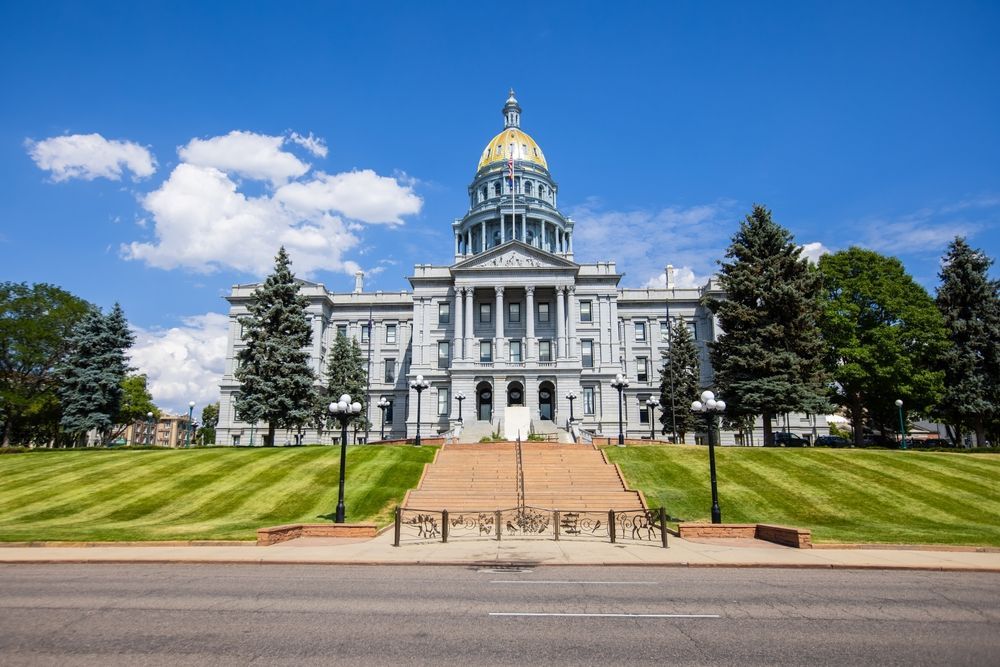
Colorado Wasteful Spending (FY 2024-25)
Department of Corrections: $ 7,995,411 Increase 28.3 FTE
● Transgender Unit and Healthcare
- $2,677,911 to create two transgender living units totaling 148 beds.
- $5,317,500 for “gender-confirming surgical care.
●Clinical Staff Incentives
- $6,312,464 General Fund to provide incentive payments for certain DOC clinical staff up to $25,000.
- The bill includes an increase of $6,312,464 General Fund to provide incentive payments for certain DOC clinical staff up to $25,000.
●HB 24-1389 School Funding 2023-24 for New Arrival Students (immigrants): $24,000,000
- The bill provides $24,000,000 to be distributed to school districts and charter schools for new arrival students. It increases state expenditures and school district funding in the current FY 2023-24 only.
● Office of New Americans Expansion (immigrants): $119,029 General Fund and 1.5 FTE
- $119,029 General Fund and 1.5 FTE for an administrator to manage ONA grants, coordinate with other entities, and identify opportunities for new migrant career pathway enhancement and a full-time program assistant to support the ONA Director.
-This office has had difficulty expending grants.
●SB 24-182 Immigrant Identification Document Issuance: $ 122,855
- The bill changes certain requirements for the issuance of driver licenses or state identification cards to individuals who are not lawfully present in the United States. The bill increases state expenditures for FY 2024-25 and FY 2025-26 only.
●HB 24-1280 Welcome, Reception, Integration, Grant Program:
$ 2,436,862
- The bill creates the Statewide Welcome, Reception, and Integration Grant Program to provide assistance to migrants. It transfers funds in FY 2024-25 only.
●Immigrant Legal Defense Fund: $ 350,000
- Long Bill budget amendment
- A doubling of the fund for FY 2024-25 making a total budget of $700,000. This funding is used for public defense for people facing immigration legal issues. Sponsored by Rep. Mabrey and Sen. Gonzalez.
●Office of Health Equity and Environmental Justice: $ 2,840,715
- Funding for the Office
- Mission: Build partnerships to mobilize community power and transform systems to advance health equity and environmental justice.
- What this office does to advance their mission:
1. Build relationships with communities and across sectors to address root causes of health disparities.
2. Use equity in decision-making and partner with all sectors of government to embed health and equity considerations into their decision-making process.
3. Use data to support the narrative of the social determinants of health and tell the story of what creates health.
4. De-center communications from the English language or any one dominant language, and prioritize language justice when engaging with communities.
5. Develop, implement, and provide guidance on health equity training, practice, and policies within CDPHE and across the state of Colorado.
6. Focus on upstream determinants of health, guided by the Bay Area Regional Health Inequities Initiative.
●HB 24-1197 Department of Public Safety Supplemental: $ 9,800,000
- Funding for Community-based organizations providing service for migrants.
- Funds to provide grants to community-based organizations providing services to people migrating to Colorado.
●Department of Education: $ 56,100,000
- Expanding Healthy Meals for All Program.
- Adds $56.1 million total funds for the Healthy School Meals for All Program, including $40.6 million from the Healthy School Meals for All Program General Fund Exempt Account and $15.5 million from the General Fund. This includes an increase of $56.0 million for meal reimbursements and $100,000 for consulting resources.
●HB 21-1318 Department of Public Health & Environment: $ 198,192
- Outdoor Equity Program
- This bill injected identity politics into access to the outdoors.
●Department of Public Health & Environment: $2,840,715 total funds and 8.3 FTE
- Creating the Office of Health Equity and Environmental Justice by combining two offices.
- The bill includes an increase of $2,840,715 total funds and 8.3 FTE, including a reduction of $11,349 General Fund, to join the Environmental Justice Program with the Office of Health Equity to form the Office of Health Equity and Environmental Justice (OHEEJ) for the purpose of centralizing environmental justice staff. OHEEJ is responsible for ongoing environmental justice work, including administration of environmental health mitigation grants through the Community Impact Cash Fund.
●Department of Revenue: $714,515 total funds and 8.3 FTE
- GENTAX & DRIVES SUPPORT FUNDING: The bill includes an increase of $714,515 total funds and 8.3 FTE, comprised of $442,906 General Fund and $271,609 cash funds from the Colorado DRIVES Vehicle Services. Account, in FY 2024-25. Funds will address the backlog of upgrades and system enhancements to the DRIVES and GenTax systems stemming from legislative, user experience, and system operational demands.
The Gallery Is Supposed to Be Full
by Michael J Badagliacco, “MJB”
Sit through enough city council nights, school board hearings, or county commission days and the word “circus” starts to sound like a convenient label. It is what people say when the room is no longer empty and the comments no longer arrive pre-cleared. What is actually happening, in Montrose and in a thousand other towns, is simpler. More people are participating.
Self-government in a Constitutional Republic is messy. That line is getting a workout wherever local bodies still meet in public. The gallery fills. Public comment runs long. A small group becomes a regular presence for months, some agree with them while plenty of others do not. Disagreement does not cancel the fact that they showed up. Local government is supposed to hear from the public, not only from the people already lined up with the dais.
Most of us would prefer a quiet, orderly meeting. Not everyone who takes a seat is looking to cause chaos. The worse option is an empty chamber and an electorate that has checked out. Somewhere where everyone nods along does not teach much, any more than muscle grows from sitting still. Better to hear the sides in the same night, under the same clock, with the same rules.
Office is not a dinner party
Once meetings and work sessions open up to real back-and-forth, the tone changes. Some of what gets said is pointed. Some of it is hard to sit through. That is not a breakdown of the republic. That is what happens when “we the people” are allowed to speak where the decisions are made.
Elected office is not a dinner party at the statehouse either. The people who like what you are doing rarely step up to the microphone. The ones who don’t agree will. It is easy to enjoy public comment when the speakers are on your side. It is another thing when they are not. A legislator who only wants praise has mistaken a constituent for a guest.
The same pattern holds one floor down and one floor up. School boards hear from parents who never came before a curriculum fight. County commissions hear from ranchers, landlords, and the people who live next to the gravel pit. State committee rooms fill when a tax, a water right, or a criminal statute is on the table. A full gallery that looks more like the whole community, not a single faction that got there first, is what the hope has always been: opinions representative enough that the body cannot pretend the town is unanimous.
A republic has a floor and a ceiling
Calling all of this “democracy” is true only in the everyday sense that people get a say. The American design is a constitutional republic, and that matters at the local level as much as it does in Washington. The gallery does not become the government because it is loud. The board still has to vote on the record. The charter still limits what a council may do. The state constitution still sits above a city ordinance. The federal Constitution still sits above both.
Those limits are not a snub to participation. They are what keep a spirited night from turning into a mob that wins by stamina. Time limits on comment, recognition by the chair, published agendas, minutes, ethics rules, and the right of the losing side to come back next month: these are the unglamorous tools that make a mess productive. Without them, the fullest room is just the faction that can stay the latest. With them, a pointed speaker is still a citizen, and a council that disagrees still has to explain itself in public.
That is why the circus label is so tempting to people already in the chairs. If the night is a show, they can dismiss it. If the night is civic engagement, they have to answer. The republic asks them to answer.
Where the country actually runs
Most of American life is not decided on cable news. It is decided in rooms with fluorescent lights and a Pledge of Allegiance that still starts the meeting. Zoning, streets, water, schools, sheriffs, property taxes, public health rules, and the tone of a downtown are state and local questions. A constitutional republic that works only in theory at the national level, and goes quiet in the county building, is a republic that has already begun to hollow out.
The empty chamber is the real failure. It produces two bad outcomes at once. Officeholders govern among themselves and then act surprised when the public arrives late and angry. Residents outsource their opinions to national slogans and then treat the city council as a proxy war for a fight the council cannot settle. Neither habit is participation. Both make the meeting look like a circus when the public finally walks in.
The healthier pattern is ordinary and slow. People read the packet. They learn the difference between a work session and a hearing. They speak to the item on the agenda. They vote in the municipal election that almost nobody headlines. They come back after they lose. That last piece is the one national politics keeps forgetting. In a republic, losing a vote is not proof that the process died. It is proof that the process happened.
How to show up
Help looks like work, not a performance. Become informed on the actual item, not only on the slogan that traveled in from somewhere else. Be an active participant in the body that can still change the outcome. Vote in the off-year, the school board race, the special district, the city election that decides who sits through these nights when the cameras are gone.
When you attend, be respectful of others, whether you agree with them or not. Respect is not a verdict on the argument. It is how citizens share a room that belongs to all of them. A community of differing views and strong opinions will produce tension. It is still possible to agree to disagree without pretending the other person is an extra in somebody’s show.
Elected people who can find common ground in public give the rest of the town permission to do the same. Participation is what makes that possible. Without it, “common ground” is just two colleagues agreeing in a quiet building.
The process, not the mood
To some it may look like a circus. To a constitutional republic it looks like the system working in the only place most people can still touch it. Every opinion does not have to be wise to deserve a hearing. Not every comment is helpful. Not every meeting is buttoned down and tidy. The standard is not a dinner party. The standard is whether the public can still get in the room, whether the rules still apply to every speaker, and whether the people who lose tonight can come back next month as citizens rather than as enemies.
We will not always agree. We are not supposed to. We are supposed to keep the chamber open, keep the record honest, and remember that a full gallery is not a crisis. An empty one is.