
Resolving family legal issues can be stressful and complicated. Emotions run high, and it can be difficult to see the matter clearly. You need objective legal counsel from an experienced family attorney. Call the Law Office of John Williams in Charlotte, NC. John Williams can assist you if you're filing for divorce. He also handles child custody and guardianship cases.
Arrange for a consultation with a divorce attorney in Charlotte, NC today.
State Issues
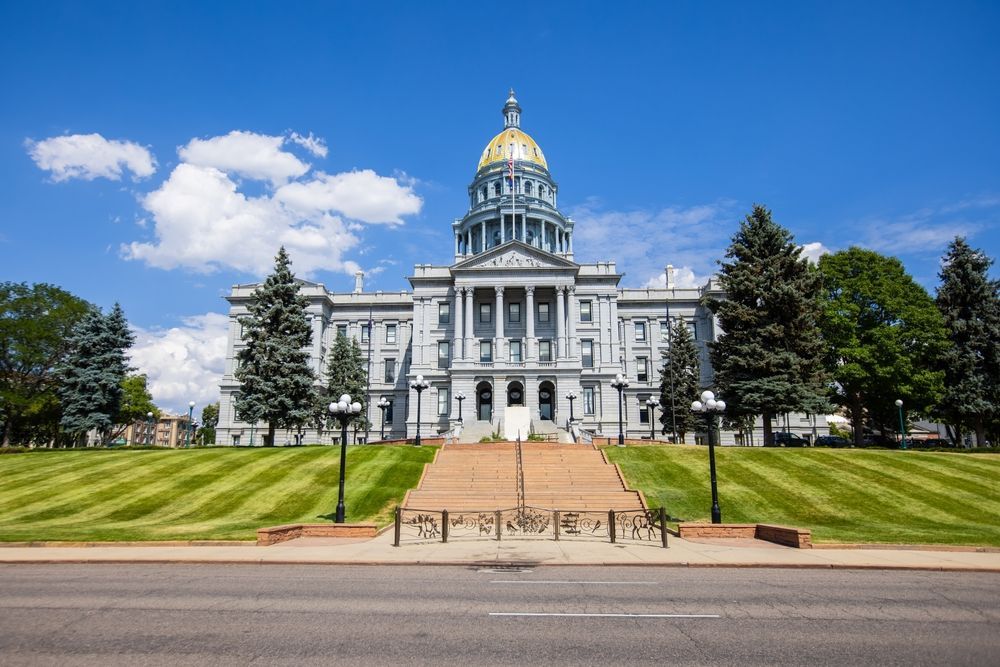
Colorado Wasteful Spending (FY 2024-25)
Department of Corrections: $ 7,995,411 Increase 28.3 FTE
● Transgender Unit and Healthcare
- $2,677,911 to create two transgender living units totaling 148 beds.
- $5,317,500 for “gender-confirming surgical care.
●Clinical Staff Incentives
- $6,312,464 General Fund to provide incentive payments for certain DOC clinical staff up to $25,000.
- The bill includes an increase of $6,312,464 General Fund to provide incentive payments for certain DOC clinical staff up to $25,000.
●HB 24-1389 School Funding 2023-24 for New Arrival Students (immigrants): $24,000,000
- The bill provides $24,000,000 to be distributed to school districts and charter schools for new arrival students. It increases state expenditures and school district funding in the current FY 2023-24 only.
● Office of New Americans Expansion (immigrants): $119,029 General Fund and 1.5 FTE
- $119,029 General Fund and 1.5 FTE for an administrator to manage ONA grants, coordinate with other entities, and identify opportunities for new migrant career pathway enhancement and a full-time program assistant to support the ONA Director.
-This office has had difficulty expending grants.
●SB 24-182 Immigrant Identification Document Issuance: $ 122,855
- The bill changes certain requirements for the issuance of driver licenses or state identification cards to individuals who are not lawfully present in the United States. The bill increases state expenditures for FY 2024-25 and FY 2025-26 only.
●HB 24-1280 Welcome, Reception, Integration, Grant Program:
$ 2,436,862
- The bill creates the Statewide Welcome, Reception, and Integration Grant Program to provide assistance to migrants. It transfers funds in FY 2024-25 only.
●Immigrant Legal Defense Fund: $ 350,000
- Long Bill budget amendment
- A doubling of the fund for FY 2024-25 making a total budget of $700,000. This funding is used for public defense for people facing immigration legal issues. Sponsored by Rep. Mabrey and Sen. Gonzalez.
●Office of Health Equity and Environmental Justice: $ 2,840,715
- Funding for the Office
- Mission: Build partnerships to mobilize community power and transform systems to advance health equity and environmental justice.
- What this office does to advance their mission:
1. Build relationships with communities and across sectors to address root causes of health disparities.
2. Use equity in decision-making and partner with all sectors of government to embed health and equity considerations into their decision-making process.
3. Use data to support the narrative of the social determinants of health and tell the story of what creates health.
4. De-center communications from the English language or any one dominant language, and prioritize language justice when engaging with communities.
5. Develop, implement, and provide guidance on health equity training, practice, and policies within CDPHE and across the state of Colorado.
6. Focus on upstream determinants of health, guided by the Bay Area Regional Health Inequities Initiative.
●HB 24-1197 Department of Public Safety Supplemental: $ 9,800,000
- Funding for Community-based organizations providing service for migrants.
- Funds to provide grants to community-based organizations providing services to people migrating to Colorado.
●Department of Education: $ 56,100,000
- Expanding Healthy Meals for All Program.
- Adds $56.1 million total funds for the Healthy School Meals for All Program, including $40.6 million from the Healthy School Meals for All Program General Fund Exempt Account and $15.5 million from the General Fund. This includes an increase of $56.0 million for meal reimbursements and $100,000 for consulting resources.
●HB 21-1318 Department of Public Health & Environment: $ 198,192
- Outdoor Equity Program
- This bill injected identity politics into access to the outdoors.
●Department of Public Health & Environment: $2,840,715 total funds and 8.3 FTE
- Creating the Office of Health Equity and Environmental Justice by combining two offices.
- The bill includes an increase of $2,840,715 total funds and 8.3 FTE, including a reduction of $11,349 General Fund, to join the Environmental Justice Program with the Office of Health Equity to form the Office of Health Equity and Environmental Justice (OHEEJ) for the purpose of centralizing environmental justice staff. OHEEJ is responsible for ongoing environmental justice work, including administration of environmental health mitigation grants through the Community Impact Cash Fund.
●Department of Revenue: $714,515 total funds and 8.3 FTE
- GENTAX & DRIVES SUPPORT FUNDING: The bill includes an increase of $714,515 total funds and 8.3 FTE, comprised of $442,906 General Fund and $271,609 cash funds from the Colorado DRIVES Vehicle Services. Account, in FY 2024-25. Funds will address the backlog of upgrades and system enhancements to the DRIVES and GenTax systems stemming from legislative, user experience, and system operational demands.
Medicaid Growth Is Crowding Out Everything Else
in Colorado’s Budget
Colorado’s budget writers face another large shortfall for the 2027-28 fiscal year, with Legislative Council Staff and the governor’s office projecting a gap of roughly $1.6 billion once known obligations are counted. Revenue collections have improved modestly from earlier forecasts, yet the gap remains because spending pressures, led by Medicaid, continue to outrun the growth allowed under the Taxpayer’s Bill of Rights.
Fewer People, Much Higher Costs
Medicaid enrollment has fallen about 30 percent since the height of pandemic-era continuous coverage. Average monthly rolls dropped from roughly 1.72 million to 1.21 million between fiscal years 2023 and 2025. Over the same period, total program spending rose by more than $2 billion, and average spending per member climbed from about $7,900 to nearly $13,000. The remaining enrollees are simply using far more services.
Long-term services and supports for elderly and disabled Coloradans account for the largest share of the increase. That group represents roughly 8 percent of enrollees but nearly half of Medicaid costs. Community-based long-term care, behavioral health, and pharmacy spending have grown especially fast. General Fund appropriations for these categories have expanded by well over a billion dollars in recent years, far outpacing the rest of state government.
Legislative Expansions That Overran Estimates
Part of the pressure comes from programs the legislature itself created and then watched exceed their fiscal notes. Cover All Coloradans, enacted in 2022 on a party-line vote, provides Medicaid-like coverage to pregnant women and children who meet income guidelines but are ineligible for standard Medicaid because of their immigration status. Nonpartisan analysts originally projected roughly $15 million in General Fund costs for an early full year and a few thousand enrollees. Actual spending reached about $104.5 million in the current fiscal year, with enrollment near 28,000 to 30,000 people, mostly children. Projections for the following year climbed higher still, more than six times the original estimate.
Lawmakers later approved limits on dental benefits, new long-term care enrollments, and other services under the program to contain the overrun. Those adjustments came only after the costs had already contributed to successive billion-dollar budget gaps. Similar patterns appear in other state-funded expansions that added ongoing obligations without corresponding revenue or utilization controls. Emergency services for noncitizens remain a smaller, federally matched share of total Medicaid spending, but the state-funded expansions sit fully on Colorado taxpayers.
TABOR Limits and the Crowding-Out Risk
TABOR restricts state revenue growth to the combined rate of inflation and population growth, typically around 3 to 4 percent. Medicaid General Fund spending has grown at roughly twice that pace in recent years. The program now consumes a third or more of the General Fund operating budget. Officials have warned that, left on its current trajectory, Medicaid would eventually consume nearly all available General Fund resources for other departments, with some projections pointing to the early 2040s.
Lawmakers already reduced certain Medicaid provider rates and limited some services in the current budget to close a prior gap. Those steps have not been enough to offset higher utilization or the cost of expansions that grew far beyond their original forecasts. Without sustained reductions in the rate of growth, further cuts to education, higher education, transportation, and other core functions become unavoidable.
Federal Changes Add Pressure
New federal rules under the One Big Beautiful Bill Act will further constrain Colorado’s options. Caps on hospital provider fees, which the state uses to draw federal matching funds for Medicaid, begin to tighten in the 2027-28 budget year. Losses start in the range of $100 million and grow as the allowable percentage of net patient revenue declines toward 3.5 percent. The same law shifts additional Supplemental Nutrition Assistance Program costs onto the state, estimated at roughly $158 million in the near term, and imposes new eligibility and work requirements.
Economy and the November Ballot
Forecasters describe a slow-growth environment with limited hiring and firing. Higher-income households have supported consumer spending, while delinquency rates on credit cards, auto loans, and other debt have risen. Some analyses place recession odds near 40 percent, citing trade tensions, energy prices, and other risks.
Voters will decide several measures in November that could alter the revenue picture. One would replace the flat income tax with a graduated structure and dedicate new collections to education, health care, and child care, exempting the added revenue from TABOR limits. Another would raise the TABOR cap to retain surplus dollars primarily for K-12 education. A third would lock the current 4.4 percent income tax rate in statute. Any of these could change the size of the gap, but none would automatically slow the underlying growth in Medicaid utilization or reverse the cost of expansions that already overshot their estimates.
The pattern is consistent: enrollment falls while intensity of service rises, past expansions lock in higher baselines, and federal matching funds become less flexible. Closing the gap will require choices about what services the state can sustainably fund, not simply another round of temporary reductions or new revenue requests.