Resolving family legal issues can be stressful and complicated. Emotions run high, and it can be difficult to see the matter clearly. You need objective legal counsel from an experienced family attorney. Call the Law Office of John Williams in Charlotte, NC. John Williams can assist you if you're filing for divorce. He also handles child custody and guardianship cases.
Arrange for a consultation with a divorce attorney in Charlotte, NC today.
State Issues
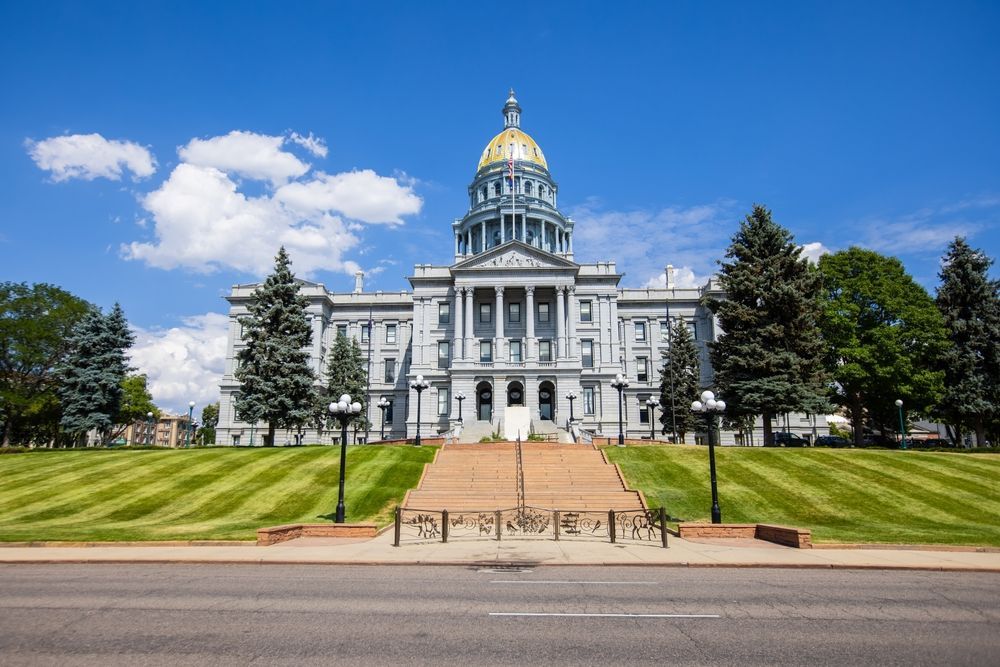
Colorado Wasteful Spending (FY 2024-25)
Department of Corrections: $ 7,995,411 Increase 28.3 FTE
● Transgender Unit and Healthcare
- $2,677,911 to create two transgender living units totaling 148 beds.
- $5,317,500 for “gender-confirming surgical care.
●Clinical Staff Incentives
- $6,312,464 General Fund to provide incentive payments for certain DOC clinical staff up to $25,000.
- The bill includes an increase of $6,312,464 General Fund to provide incentive payments for certain DOC clinical staff up to $25,000.
●HB 24-1389 School Funding 2023-24 for New Arrival Students (immigrants): $24,000,000
- The bill provides $24,000,000 to be distributed to school districts and charter schools for new arrival students. It increases state expenditures and school district funding in the current FY 2023-24 only.
● Office of New Americans Expansion (immigrants): $119,029 General Fund and 1.5 FTE
- $119,029 General Fund and 1.5 FTE for an administrator to manage ONA grants, coordinate with other entities, and identify opportunities for new migrant career pathway enhancement and a full-time program assistant to support the ONA Director.
-This office has had difficulty expending grants.
●SB 24-182 Immigrant Identification Document Issuance: $ 122,855
- The bill changes certain requirements for the issuance of driver licenses or state identification cards to individuals who are not lawfully present in the United States. The bill increases state expenditures for FY 2024-25 and FY 2025-26 only.
●HB 24-1280 Welcome, Reception, Integration, Grant Program:
$ 2,436,862
- The bill creates the Statewide Welcome, Reception, and Integration Grant Program to provide assistance to migrants. It transfers funds in FY 2024-25 only.
●Immigrant Legal Defense Fund: $ 350,000
- Long Bill budget amendment
- A doubling of the fund for FY 2024-25 making a total budget of $700,000. This funding is used for public defense for people facing immigration legal issues. Sponsored by Rep. Mabrey and Sen. Gonzalez.
●Office of Health Equity and Environmental Justice: $ 2,840,715
- Funding for the Office
- Mission: Build partnerships to mobilize community power and transform systems to advance health equity and environmental justice.
- What this office does to advance their mission:
1. Build relationships with communities and across sectors to address root causes of health disparities.
2. Use equity in decision-making and partner with all sectors of government to embed health and equity considerations into their decision-making process.
3. Use data to support the narrative of the social determinants of health and tell the story of what creates health.
4. De-center communications from the English language or any one dominant language, and prioritize language justice when engaging with communities.
5. Develop, implement, and provide guidance on health equity training, practice, and policies within CDPHE and across the state of Colorado.
6. Focus on upstream determinants of health, guided by the Bay Area Regional Health Inequities Initiative.
●HB 24-1197 Department of Public Safety Supplemental: $ 9,800,000
- Funding for Community-based organizations providing service for migrants.
- Funds to provide grants to community-based organizations providing services to people migrating to Colorado.
●Department of Education: $ 56,100,000
- Expanding Healthy Meals for All Program.
- Adds $56.1 million total funds for the Healthy School Meals for All Program, including $40.6 million from the Healthy School Meals for All Program General Fund Exempt Account and $15.5 million from the General Fund. This includes an increase of $56.0 million for meal reimbursements and $100,000 for consulting resources.
●HB 21-1318 Department of Public Health & Environment: $ 198,192
- Outdoor Equity Program
- This bill injected identity politics into access to the outdoors.
●Department of Public Health & Environment: $2,840,715 total funds and 8.3 FTE
- Creating the Office of Health Equity and Environmental Justice by combining two offices.
- The bill includes an increase of $2,840,715 total funds and 8.3 FTE, including a reduction of $11,349 General Fund, to join the Environmental Justice Program with the Office of Health Equity to form the Office of Health Equity and Environmental Justice (OHEEJ) for the purpose of centralizing environmental justice staff. OHEEJ is responsible for ongoing environmental justice work, including administration of environmental health mitigation grants through the Community Impact Cash Fund.
●Department of Revenue: $714,515 total funds and 8.3 FTE
- GENTAX & DRIVES SUPPORT FUNDING: The bill includes an increase of $714,515 total funds and 8.3 FTE, comprised of $442,906 General Fund and $271,609 cash funds from the Colorado DRIVES Vehicle Services. Account, in FY 2024-25. Funds will address the backlog of upgrades and system enhancements to the DRIVES and GenTax systems stemming from legislative, user experience, and system operational demands.
2026 Midterms - Across Colorado and the Nation
Analysis and Commentary
County clerks across Colorado had processed 2,765,912 ballots by mid-November in the 2026 midterm elections. That works out to roughly 67.3% of the state’s active registered voters, more than the 2022 midterms but short of the nearly 75% seen in 2018.
Colorado tracks “active” registered voters as the standard measure for turnout. These are the people currently eligible to receive a ballot without extra steps. Inactive voters, those who have not confirmed their address or voted in recent cycles, do not automatically get ballots and are not included in the usual turnout percentages. As of the latest secretary of state figures, Colorado had about 4.1 million active voters. The 2.76 million ballots therefore reflect participation among that active pool, not every name that has ever been on the rolls.
Party Turnout: Higher Rates Among Democrats, Volume Still Dominated by Unaffiliated
Among active voters, Democrats participated at the highest rate. Roughly 77% of active Democratic voters returned a ballot, about 789,500 of them. Republicans were close behind at just over 73%, or roughly 655,000 ballots. Unaffiliated voters, Colorado’s largest group at a little more than half of all active registrants, turned out at about 61%. That still produced the biggest absolute number of ballots: more than 1.27 million.
Put another way, unaffiliated voters make up about 51% of the active rolls but cast about 46% of the ballots. Democrats make up roughly 25% of active voters yet accounted for nearly 29% of ballots. Republicans, about 22% of the active list, cast just under 24% of the ballots. The difference between registration share and ballot share is the turnout gap.
Participation among unaffiliated and Democratic voters ran higher than in the 2022 midterms. Republican turnout lagged behind that earlier cycle. About 95% of all ballots were returned by mail.
Younger Voters Up, But Experience Still Matters More Than Entitlement
Nearly 600,000 voters between 18 and 34 cast ballots. New Era Colorado put participation in that age group at 48%, up from 45% in 2022. Christina Soliz, executive director of the New Era Colorado Action Fund, framed it as young people turning out “with a vengeance this year to fight back against the wealthy and secure a future where all Coloradans can thrive, not just a select few.”
That rhetoric sits uneasily with basic economic reality. The people who build businesses, take the risks, and create the jobs are the ones providing the paychecks those younger workers want. A college degree does not automatically confer practical knowledge, judgment, or business acumen. Until those are earned through real work, the highest wages properly belong to those who have already demonstrated they can deliver results. Treating experience as optional while demanding top pay is not a path to shared prosperity; it is a demand that others subsidize the learning curve.
Voters 35 and older still cast far more ballots in raw numbers. Nearly 900,000 people aged 35 to 54 voted, and more than 920,000 between 55 and 74 did so. The Front Range accounted for the bulk of the total. El Paso County led with more than 326,000 ballots, followed by Denver at about 316,800 and Jefferson County at roughly 316,100.
The secretary of state’s office continued releasing daily updates through the middle of the month as remaining ballots were processed. The final numbers show a midterm that cleared the 2022 mark without matching the higher participation of 2018, with the clearest differences appearing once the active-voter figures are broken out by party and age.
Nationally, a similar pattern has emerged:
Roughly 123.5 million Americans cast ballots in the November 3, 2026 midterm elections. That equals about 49.1% of the voting-eligible population, according to preliminary estimates from the University of Florida Election Lab. It ranks as the second-highest midterm turnout since 1914, trailing only the 2018 elections.
Unlike Colorado, which reports turnout primarily against its active registered voter list, national figures use the broader voting-eligible population. That includes citizens 18 and older who are not disqualified by felony convictions or other state rules. The 2026 total sits well above the roughly 112 million ballots of the 2022 midterms and approaches the 2018 peak.
Control of Congress Shifts Decisively
Democrats gained control of both the House and the Senate. In the House, projections place them in the range of 255 to 259 seats, with Republicans holding roughly 169 to 176. That represents a net gain of around 40 seats or more for Democrats, their largest House majority in decades. Estimates of the national House popular vote show Democrats ahead by more than 13 points—the biggest midterm popular-vote margin for either party in half a century.
In the Senate, Democrats secured a majority in the mid-50s (counting independents who caucus with them), while Republicans fell to the mid-40s. They flipped at least eight Republican-held seats, including contests in Iowa, Kansas, Maine, North Carolina, Ohio, South Carolina, Texas, and Mississippi. A small number of races remained outstanding into mid-November, but the chamber’s control was clear.
Governorships and state legislative chambers also moved in the same direction in multiple states. The results ended unified Republican control of Washington and produced what many outlets described as a “blue tsunami.”
Gas Prices and the Voter Mood
Higher gasoline prices shaped the backdrop. National averages stood near $2.80–$3.06 a gallon in early 2026, before the Iran conflict disrupted Middle East oil flows. By the election they had settled around $4.00–$4.12—still well below the Biden-era peak of roughly $5.01–$5.06 reached in June 2022 after Russia’s invasion of Ukraine, yet clearly higher than the pre-Iran figures.
The increase fed frustration over household costs. President Trump and Vice President Vance later acknowledged that elevated gas prices, tied to the war, contributed to Republican losses. Voters saw prices that had climbed substantially from earlier in the year even as they remained short of the 2022 highs.
Turnout Patterns and What Drove the Numbers
High participation was concentrated in competitive states. Maine, Minnesota, and Michigan posted some of the highest rates, each exceeding 63% of eligible voters. Lower-turnout states such as West Virginia fell closer to the low 30s. Exit polls and early analyses pointed to stronger Democratic performance across most demographic groups compared with 2024, including gains among voters who had supported the prior presidential ticket. Youth participation rose relative to recent midterms, and Black and Latino turnout contributed to several unexpected results, particularly in the South.
Analyses of the swing differed on the exact mix of factors. Some attributed the bulk of Democratic gains to a turnout gap—higher participation among their voters and lower among Republicans—while others noted measurable shifts among voters who changed party preference. House races in districts that had favored Republicans by double digits two years earlier flipped in multiple states.
Context Against Recent Midterms
The 2026 participation level exceeds the 2022 midterms and sits just short of 2018. In raw ballots and relative to the eligible population, it ranks among the strongest non-presidential elections in modern history. The popular-vote margin and seat gains stand out even more sharply against earlier wave years such as 2010 or 2014, which produced smaller popular-vote edges.
Final certified totals will continue to adjust as remaining ballots are counted and states complete their canvasses. The early picture shows elevated turnout paired with a decisive shift in congressional control, against a backdrop of gas prices that had risen from pre-Iran levels yet stayed below the earlier Biden peak.
Final thoughts
If the Republican Party and conservatism are to shape the country’s direction and prevent a full shift toward socialism and communism, alongside growing challenges to individual liberty from radical ideologies and the potential spread of Sharia principles, then voters who share these concerns must treat the stakes seriously. Getting off our dupa and acting with sustained purpose is no longer optional.
The Republican Party and conservative-leaning unaffiliated voters have not held their end of the bargain. They have allowed the other side to set the rules and control the narrative, often reacting to short-term pressures such as higher gas prices instead of focusing on the longer-term effort by the far left to dismantle core American principles of freedom and self-government. That approach has left the opposition free to define the terms. Turning the ship requires rejecting that pattern and reclaiming the argument on lasting grounds.
We need to mobilize early and in full force! There is no “tomorrow” if we do not engage heavily and consistently to take our country back!