
Resolving family legal issues can be stressful and complicated. Emotions run high, and it can be difficult to see the matter clearly. You need objective legal counsel from an experienced family attorney. Call the Law Office of John Williams in Charlotte, NC. John Williams can assist you if you're filing for divorce. He also handles child custody and guardianship cases.
Arrange for a consultation with a divorce attorney in Charlotte, NC today.
State Issues
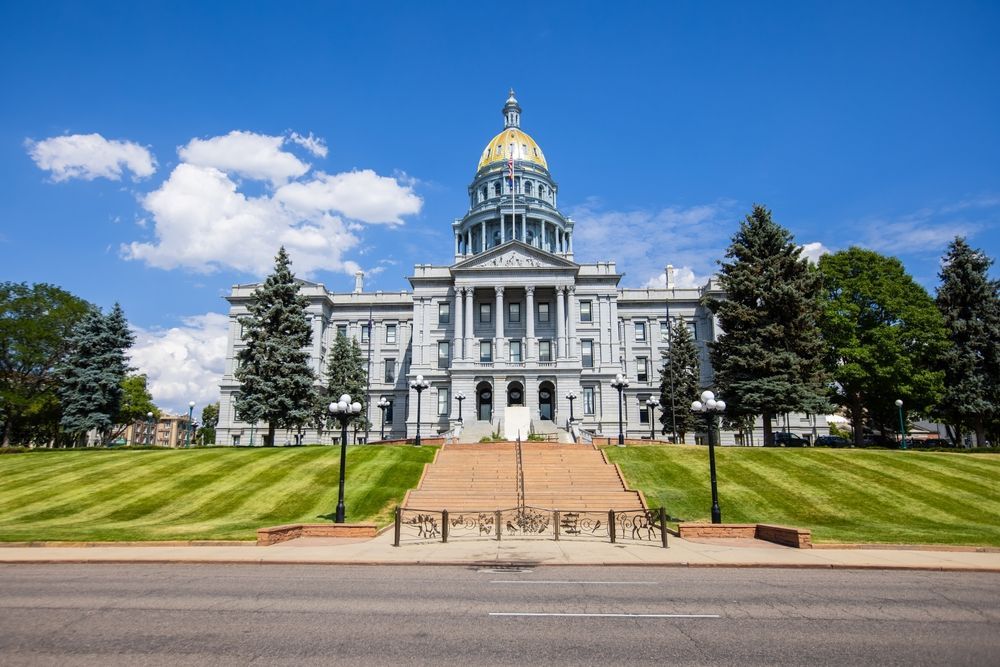
Colorado Wasteful Spending (FY 2024-25)
Department of Corrections: $ 7,995,411 Increase 28.3 FTE
● Transgender Unit and Healthcare
- $2,677,911 to create two transgender living units totaling 148 beds.
- $5,317,500 for “gender-confirming surgical care.
●Clinical Staff Incentives
- $6,312,464 General Fund to provide incentive payments for certain DOC clinical staff up to $25,000.
- The bill includes an increase of $6,312,464 General Fund to provide incentive payments for certain DOC clinical staff up to $25,000.
●HB 24-1389 School Funding 2023-24 for New Arrival Students (immigrants): $24,000,000
- The bill provides $24,000,000 to be distributed to school districts and charter schools for new arrival students. It increases state expenditures and school district funding in the current FY 2023-24 only.
● Office of New Americans Expansion (immigrants): $119,029 General Fund and 1.5 FTE
- $119,029 General Fund and 1.5 FTE for an administrator to manage ONA grants, coordinate with other entities, and identify opportunities for new migrant career pathway enhancement and a full-time program assistant to support the ONA Director.
-This office has had difficulty expending grants.
●SB 24-182 Immigrant Identification Document Issuance: $ 122,855
- The bill changes certain requirements for the issuance of driver licenses or state identification cards to individuals who are not lawfully present in the United States. The bill increases state expenditures for FY 2024-25 and FY 2025-26 only.
●HB 24-1280 Welcome, Reception, Integration, Grant Program:
$ 2,436,862
- The bill creates the Statewide Welcome, Reception, and Integration Grant Program to provide assistance to migrants. It transfers funds in FY 2024-25 only.
●Immigrant Legal Defense Fund: $ 350,000
- Long Bill budget amendment
- A doubling of the fund for FY 2024-25 making a total budget of $700,000. This funding is used for public defense for people facing immigration legal issues. Sponsored by Rep. Mabrey and Sen. Gonzalez.
●Office of Health Equity and Environmental Justice: $ 2,840,715
- Funding for the Office
- Mission: Build partnerships to mobilize community power and transform systems to advance health equity and environmental justice.
- What this office does to advance their mission:
1. Build relationships with communities and across sectors to address root causes of health disparities.
2. Use equity in decision-making and partner with all sectors of government to embed health and equity considerations into their decision-making process.
3. Use data to support the narrative of the social determinants of health and tell the story of what creates health.
4. De-center communications from the English language or any one dominant language, and prioritize language justice when engaging with communities.
5. Develop, implement, and provide guidance on health equity training, practice, and policies within CDPHE and across the state of Colorado.
6. Focus on upstream determinants of health, guided by the Bay Area Regional Health Inequities Initiative.
●HB 24-1197 Department of Public Safety Supplemental: $ 9,800,000
- Funding for Community-based organizations providing service for migrants.
- Funds to provide grants to community-based organizations providing services to people migrating to Colorado.
●Department of Education: $ 56,100,000
- Expanding Healthy Meals for All Program.
- Adds $56.1 million total funds for the Healthy School Meals for All Program, including $40.6 million from the Healthy School Meals for All Program General Fund Exempt Account and $15.5 million from the General Fund. This includes an increase of $56.0 million for meal reimbursements and $100,000 for consulting resources.
●HB 21-1318 Department of Public Health & Environment: $ 198,192
- Outdoor Equity Program
- This bill injected identity politics into access to the outdoors.
●Department of Public Health & Environment: $2,840,715 total funds and 8.3 FTE
- Creating the Office of Health Equity and Environmental Justice by combining two offices.
- The bill includes an increase of $2,840,715 total funds and 8.3 FTE, including a reduction of $11,349 General Fund, to join the Environmental Justice Program with the Office of Health Equity to form the Office of Health Equity and Environmental Justice (OHEEJ) for the purpose of centralizing environmental justice staff. OHEEJ is responsible for ongoing environmental justice work, including administration of environmental health mitigation grants through the Community Impact Cash Fund.
●Department of Revenue: $714,515 total funds and 8.3 FTE
- GENTAX & DRIVES SUPPORT FUNDING: The bill includes an increase of $714,515 total funds and 8.3 FTE, comprised of $442,906 General Fund and $271,609 cash funds from the Colorado DRIVES Vehicle Services. Account, in FY 2024-25. Funds will address the backlog of upgrades and system enhancements to the DRIVES and GenTax systems stemming from legislative, user experience, and system operational demands.
Colorado’s Radical Left-Wing legislature is at it again:
Democrats Propose Bill to Restrict Automatic Single-Use Utensils, Napkins, and Condiments
Overview of the Proposed Bill
Two Colorado Democrats have introduced legislation that would prevent restaurants and food delivery services from automatically providing single-use napkins, utensils, and condiments to customers. The bill is being promoted as a way to reduce waste and protect the environment.
Key Details of SB26-146
Senate Bill 26-146 (SB26-146) was filed on March 24 by State Sen. Lisa Cutter (D) and State Rep. Meg Froelich (D). If passed, the measure would take effect on January 1, 2027.
The bill would prohibit retail food establishments and third-party delivery platforms from supplying single-use food service items unless the customer specifically requests or confirms they want them.
What the Bill Would Prohibit
The legislation defines “single-use serviceware” as any item a restaurant or delivery service provides to help a customer consume a meal that is designed to be used once and then discarded. This includes napkins, forks, knives, spoons, straws, and a wide range of condiments.
The bill specifically lists prohibited condiments as ketchup, mustard, mayonnaise, creamer, butter, soy sauce, hot sauce, salsa, syrup, jam, jelly, sugar, salt, pepper, sweetener, and chili pepper. It would also restrict items such as cup sleeves for hot drinks.
Sponsors’ Rationale
Lawmakers claim customers are increasingly frustrated with receiving unwanted single-use items with their orders. They argue that most of these products are not recyclable or compostable and frequently contaminate recycling and composting streams.
The sponsors state that requiring restaurants statewide to ask before handing out single-use items, including condiments, would cut down on excess waste, reduce plastic pollution, and help food businesses save hundreds or even thousands of dollars each year.
Connection to Previous Legislation
This proposal expands on Colorado’s existing Plastic Pollution Reduction Act, passed in 2021 and implemented in 2024, which banned single-use plastic carryout bags. Sen. Lisa Cutter was a key sponsor of that earlier law when she served in the House. Violations of the plastic bag law can result in fines of up to $500 for a second offense and up to $1,000 for a third or subsequent violation.
Strong Opposition
The new bill has drawn sharp criticism from conservatives. Former Colorado Republican Party Chair Kristi Burton Brown called SB26-146 “ridiculous” and labeled it a “NAPKIN BAN” in a post on X. She warned that restaurants like Taco Bell could face fines of up to $1,000 for including a napkin or hot sauce packet with an order unless the customer explicitly requested it. Burton Brown also highlighted inconsistencies in the bill’s condiment list and raised concerns about delivery services such as DoorDash being penalized for unwanted items.
Opponents argue the legislation would drive up costs for the fast food and delivery service industries through higher labor expenses and would slow down the entire customer service process. They maintain that the savings claimed by the bill’s sponsors are far outweighed by the added labor costs of requiring employees to ask every customer for single-use items, confirm the request, and then fulfill it accurately. Many note that restaurants already struggle with order accuracy and question whether minimum-wage workers will consistently get these new requirements right. They warn that even small mistakes could trigger steep fines that might prove financially devastating and potentially life-altering for small businesses.
A growing number of critics are also delivering a broader message: the Colorado legislature should stay out of the daily lives of citizens and business owners. Instead of micromanaging how restaurants hand out a napkin or packet of ketchup, lawmakers should focus on addressing their own disregard for the Constitution, balancing the state budget, and ending the practice of giving away taxpayer dollars to people who are here illegally and consuming vast amounts of public resources.
Current Political Landscape
Democrats hold strong majorities in both chambers of the Colorado legislature: 43-22 in the House and 23-12 in the Senate. This gives the bill a clear path toward consideration.